🔧 12+ Hours of Non‑Stop Aging Testing – Because Reliability Matters
mei 30, 2026
Deel dit artikel
Before our products leave the factory, they go through a rigorous aging test of no less than 12 hours. This is not a random check – it is a mandatory step for every batch. Stability tested. Quality assured. Ready for our customers.
At FARHD, we believe that quality is not just a promise – it is something we prove, unit by unit, before any product reaches your hands. One of the most important (and often unseen) steps in our manufacturing process is the aging test. In this article, we take you behind the scenes to explain what the aging test is, why we run it for 12+ hours, and how it guarantees the reliability of every FARHD video intercom system.
What Is an Aging Test?
An aging test (also known as a burn‑in test) is a process where fully assembled electronic products are operated continuously for an extended period – often under elevated temperature or voltage – to identify early failures. The concept is simple: if a component or solder joint is going to fail prematurely, it is much better for it to fail in our factory than at your building entrance.
During the aging test, each unit:
- Is powered on continuously for 12+ hours (often longer for new designs or high‑end models)
- Runs through repeated cycles of simulated operation: calls, video streaming, audio playback, relay triggers
- Is monitored for any sign of instability: image freeze, audio dropout, call failure, touchscreen unresponsiveness, or unexpected reboots
Only units that complete the full test without a single anomaly are cleared for packaging and shipment.
Why 12+ Hours? Why Not Less?
Some manufacturers run aging tests for just 1‑2 hours – or skip them entirely. We chose 12+ hours because experience has shown that this duration catches the vast majority of latent defects:
- Solder joint weaknesses – Thermal expansion and contraction over several hours can reveal cracks that would otherwise cause intermittent connection issues months later.
- Component tolerance drift – Some capacitors or voltage regulators only show instability after hours of continuous heat build‑up.
- Firmware memory leaks – A firmware bug might cause a system crash after 6‑8 hours of uptime. A 2‑hour test would miss it; a 12‑hour test will catch it.
- Display or touchscreen issues – Occasional flickering or dead touch zones may only appear after the screen has been on for many hours.
By running a minimum 12‑hour aging test, we significantly reduce the probability of early‑life failures. For critical components or full system configurations, we often run 24‑hour, 48‑hour, or even 72‑hour tests.
What Does the Aging Test Include?
In our aging room, each product is connected to a test fixture that simulates real‑world operation:
| Test Parameter | What We Verify |
|---|---|
| Continuous power‑on | No unexpected shutdowns or reboots. |
| Video stability | No screen freezing, flickering, or image degradation. |
| Audio loop | Two‑way communication remains clear – no echo, noise, or dropouts. |
| Call response | Simulated doorbell presses are answered correctly every time. |
| Relay output | Unlock signals fire reliably – no sticking, no missing triggers. |
| Touchscreen (if applicable) | All touch areas remain responsive; no dead zones. |
| Network connection (IP models) | Stable IP communication, no packet loss or disconnections. |
| Night vision switching | IR cut filter and IR LEDs activate correctly under low light. |
The test environment is often kept at an elevated temperature (up to +40°C) to accelerate thermal stress. For high‑temperature versions (‑40°C to +70°C models), we also perform additional cold and hot cycling tests.
What Happens If a Unit Fails?
If any unit shows abnormal behaviour during the 12+ hour aging test, it is immediately removed from the line and sent to our failure analysis lab. Our engineers:
- Identify the root cause (e.g., a specific component, a soldering issue, a firmware bug)
- Correct the problem across all affected batches
- Re‑test the corrected units before they are allowed back into the production flow
Failed units are never shipped. This zero‑tolerance policy ensures that every FARHD product you receive has already proven its stability under stress.
The Result: Lower Failure Rates, Higher Customer Confidence
Thanks to our mandatory aging test process, FARHD enjoys one of the lowest warranty return rates in the industry. Installers and property managers report:
- Fewer on‑site troubleshooting calls
- Longer service intervals
- Higher resident satisfaction
When you choose FARHD, you are not just buying a video intercom – you are buying a product that has been proven to work, hour after hour, day after day.
See the Aging Test in Action
The video below shows a sample of our aging test process – rows of indoor monitors and outdoor stations running continuously, with technicians monitoring their status. This is not a one‑time show; it happens every day in our factory.
👉 Watch the video (embed link)
Quality Isn’t Just a Promise – It’s Proven
We could talk about our certifications, our years of experience, or our satisfied customers. And those are all important. But ultimately, what matters is that every FARHD product has been tested – not just sampled, not just visually inspected, but run under power for over 12 hours to catch any hidden defect.
That is what “Quality assured” really means.
Ready to Experience FARHD Reliability?
Whether you need a single villa kit or a thousand units for a large apartment project, every FARHD video intercom you receive has passed the 12+ hour aging test. Contact us today to request a sample, a catalog, or a quotation.
📩 Email: [email protected]
🌐 Website: www.farhd.com
💬 Reply “AGING12” – we will send you a detailed quality report and product datasheet.
#AgingTest #QualityControl #FactoryWork #ReliabilityTest #ElectronicsManufacturing
Mogelijk bent u ook geïnteresseerd in
-
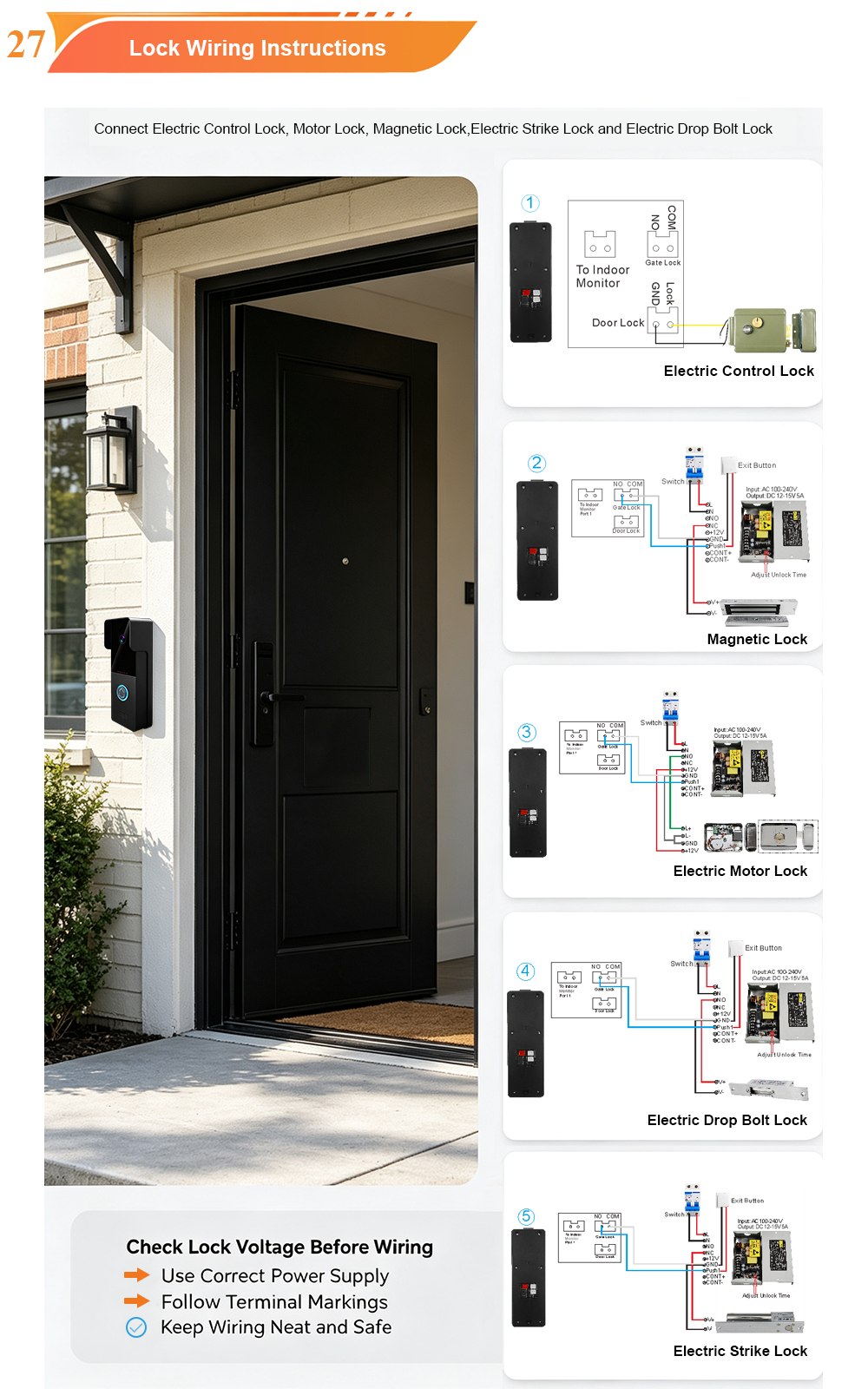
2-Wire Video Door Phone Connection with Electric Rim Lock: Unlock by Card, Indoor Monitor, and App
A complete guide to wiring an electric rim lock to a FARHD 2-wire video door phone system—and configuring three convenient unlock methods: RFID card, indoor monitor, and mobile app. Whether you are upgrading an existing building or specifying a new system, this guide covers the essentials for reliable, secure access control. Electric rim locks are…
-

Video Intercom Manufacturer & Source Factory Since 1998 | OEM ODM SKD Building Intercom
Video Intercom Manufacturer & Vertical Source Factory in China FARHD is a professional video intercom manufacturer with over 28 years of specialized experience in building security intercom systems. Established in 1998, we are a genuine building intercom factory focused on independent R&D, in-house production, and customized manufacturing for global B2B clients, including distributors, importers, engineering contractors, real estate…
-
FARHD Video Intercom System: Versatile Solutions for Apartments and Villas
When it comes to building security and smart access, one size does not fit all. Different buildings have different wiring, different layouts, and different resident expectations. That’s why FARHD offers a comprehensive range of video intercom systems—with various indoor monitors and outdoor stations to match any apartment or villa project. Since 1998, FARHD has been…
-
Low-Temperature Test: FARHD Video Intercom Screens Keep Running Smoothly in Freezing Cold
Inside the freezing chamber, it keeps working — normal display, no black screen, no shutdown. Real quality isn’t just about lab data; it’s about staying reliable in extreme conditions. A video intercom that withstands freezing cold — because your door security can’t take a day off. In many parts of the world, winter is not…