Welcome Back, Old Friends: A Full Production Tour of FARHD’s IP Video Intercom System
November 25, 2026
Diesen Artikel teilen
There is a particular kind of visit that means more than a first-time factory tour: the return visit. A new customer comes to evaluate. An old friend comes back because the first system worked, the second project is underway, and there are new requirements to discuss. That return is the most honest feedback a manufacturer can receive—and it is why we were genuinely glad to welcome our old friends back to the FARHD factory this week.
Their visit included a full production tour of our IP video intercom system: the IP outdoor panel, the indoor touch monitor, the aging test room, and the assembly workflow from component to finished unit. This article summarizes what they saw—and what those of you evaluating our IP system for villa, apartment, or commercial projects should know about it.
FARHD (Shenzhen FARHD Tech Co., Ltd) has manufactured video door phones and intercom systems since 1998, with 28 years of experience and full in-house R&D and production of core components—including TFT LCD screens, driver boards, and camera modules.
The Production Tour: Following the IP System From Component to Finished Unit
A production tour is most useful when it follows the actual chain, because the chain is the point. For an IP video intercom system, that chain runs from board production through core component assembly, final assembly, testing, and aging.
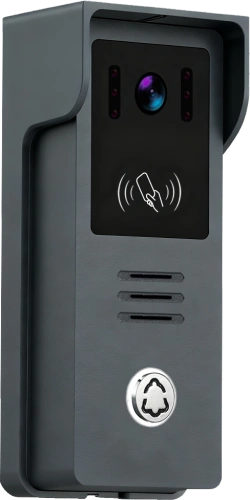
The IP Outdoor Panel
The outdoor panel is where the system meets the visitor, and where the environment meets the product. The tour covered:
Circuit board production. The driver board and communication module that handle the panel’s network interface, audio processing, and access control relays. Because FARHD produces driver boards in-house, the components that determine network stability and audio quality are controlled at the source.
Camera module assembly. Lens and sensor alignment, focus adjustment, and image quality verification—the steps that determine whether the camera produces a usable image in low light and backlight.
Housing and sealing. Gasket installation and housing assembly are where the IP65 water resistance rating is realized. A panel that passes a water-jet test in the factory but is assembled with a compressed gasket will fail in service. The tour showed how this step is controlled.
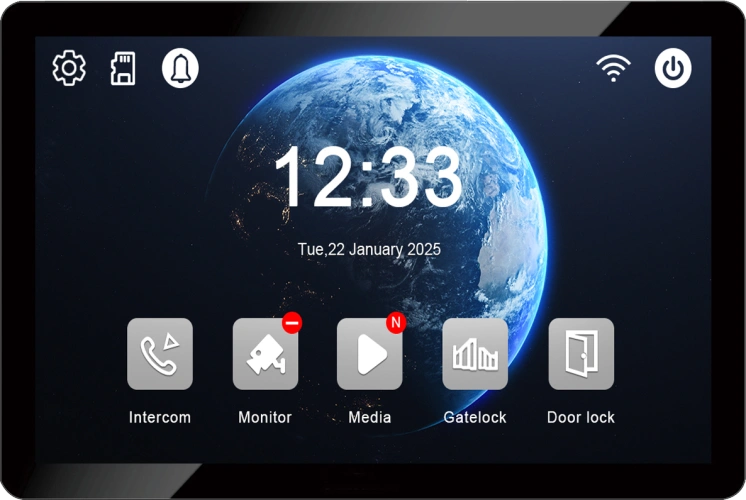
The Indoor Touch Monitor
The indoor touch monitor is where the resident actually lives with the system, and the tour covered both the display and the interface:
TFT LCD screen assembly. Because FARHD produces TFT LCD screens in-house, display quality—brightness, viewing angle, color accuracy, and touch response—is controlled at the component level rather than accepted from a third-party panel supplier.
Interface and app binding. The monitor’s touch interface, menu logic, and the app binding process were demonstrated and tested during the visit. These are the functions that determine whether a resident finds the system easy to use—and whether the integrator faces a list of setup questions after handover.
Mounting design. Simple mounting matters more than it appears. A monitor that can be pre-terminated before mounting and secured with accessible fasteners saves time on every unit—and in a building with hundreds of apartments, that time is the difference between a project that runs once and one that runs three times.
The Aging Test Room
The aging test is often the moment during a factory visit when a buyer’s understanding of “quality control” becomes concrete.
Every unit runs under power for 24 hours before shipment. Continuous operation exercises components in a way that a short functional test cannot: thermal buildup, sustained current draw, and the cumulative effect of hours of operation. Units with marginal defects reveal themselves during this window.
Audio and video performance are verified during the test. For an IP system, this includes the network interface and communication behavior—not just the display and speaker.
Failed units do not proceed. A unit that fails during aging is removed, investigated, and either reworked or rejected. It does not reach a customer’s building.
Our returning friends saw the racks of units running under power and the test records that accompany them. It is a claim that is easy to make and easy to verify—either the aging room exists and operates, or it does not.
The Assembly Workflow
The tour concluded with final assembly and testing:
ESD-controlled assembly. Boards and camera modules are handled with wrist straps, grounded workstations, and anti-static packaging—because a board assembled correctly but handled without ESD protection can fail weeks later in a way that is nearly impossible to trace.
Functional testing. Each unit is tested to confirm it performs its intended functions before it enters aging.
Post-aging verification and packaging. After aging, units are checked again, cosmetically inspected, and packed in packaging designed to protect them in transit—right-sized cartons, internal cushioning, and moisture protection for sea freight.
The IP Video Intercom System: Specifications That Matter in the Field
The tour was organized around the system’s actual capabilities. These are the specifications that determine whether an IP intercom fits a project.
✅ TCP/IP Network Connection, Easy Integration With Network
The system communicates over a standard TCP/IP network, which means it integrates with the building’s existing network infrastructure rather than requiring a proprietary cabling system.
What this enables in practice:
Structured cabling. The system can use the same Cat5e or Cat6 cabling and switching infrastructure as other building systems, simplifying distribution across floors and buildings.
Scalability. Additional devices can be added as the network expands—useful in phased developments where buildings are completed in stages.
Integration with building systems. Network-based devices can be monitored and configured more efficiently than standalone systems, and can exchange events with other network-connected systems where the project requires it.
Practical planning note: IP systems depend on network quality. During commissioning, latency, jitter, and packet loss should be verified on the path between devices, and QoS should be configured for voice traffic where the network is shared. FARHD’s technical support group can advise on network configuration during commissioning.
✅ Mobile APP Remote Unlock, Call, Snapshot & Record
App binding extends the resident’s control beyond the indoor monitor:
Remote unlock. The resident can release the door from their phone, whether they are upstairs, in the garden, or away from the property.
Call and two-way communication. When a visitor calls, the resident can answer on the app, see the visitor, and speak to them.
Snapshot. The resident can capture an image of the visitor—useful for delivery records and for reviewing who approached the property.
Record. Call and visitor records are retained for review, supporting both convenience and security.
Practical planning note: A smooth app binding process is what makes these features usable. Setup friction in an unfamiliar language is one of the most common sources of early support calls—which is why the binding flow was demonstrated during the tour rather than described.
✅ Support Multi Indoor Monitors, Multi Door Stations, Flexible Extension
The system supports multiple indoor monitors and multiple door stations on the same network—giving villa and apartment projects the coverage they need.
For villas: A main gate, garden door, and garage can each have a door station, with indoor monitors in the entrance hall, kitchen, master bedroom, and home office. Calls are identified by source, and unlock control is independent for each entry point.
For apartments: The building entrance station serves the shared lobby, and each apartment can support a second video doorbell in addition to the entrance station—extending coverage from the lobby to the apartment door.
Flexible extension means the system can grow with the property. A villa that starts with one entrance can add a second station later; a phased development can add buildings as they are completed, without replacing the entrance infrastructure.
✅ Rich SDK, Works for Villa, Apartment & Commercial Building Projects
The SDK (Software Development Kit) is the specification that matters most for integrators and developers working on larger or more customized projects.
What an SDK enables:
Integration with third-party systems. The intercom can exchange events and commands with building management systems, access control platforms, or property management software—so the intercom becomes part of the building’s infrastructure rather than a standalone device.
Custom application development. Partners can build their own interfaces or workflows on top of the intercom system, rather than being limited to the manufacturer’s app.
Project-specific functionality. For commercial buildings, mixed-use developments, and large communities with specific operational requirements, the SDK provides the path to a tailored solution.
Practical planning note: SDK availability should be confirmed against the specific model and firmware version, and the scope of the API documented during specification. FARHD’s engineering team can discuss SDK capabilities for specific project requirements.
The System’s Fit: Villa, Apartment, and Commercial Building Projects
The combination of TCP/IP architecture, app access, multi-device support, and SDK integration positions this system for a range of projects:
Villen — multiple entry points, multiple indoor monitors, aesthetic outdoor units, and remote access for homeowners who travel.
Mehrfamilienhäuser — shared entrance stations with room list display, face recognition, and card unlock; indoor monitors in each apartment; per-apartment second doorbells where required.
Kommerzielle Gebäude — entrances that serve staff, tenants, and visitors with different access paths; integration with building systems via SDK; multi-tenant directory structures.
Mixed-use and multi-building communities — scalable architecture, shared directory management, and consistent configuration across buildings and phases.
No MOQ, OEM & ODM Customization Available
FARHD offers this IP system with no minimum order quantity, which matters for partners at different stages of business:
Händler can place a first order sized to actual market demand rather than to a factory’s production minimum, reducing inventory risk while testing the product in their market.
Systemintegratoren can order exactly what a specific project requires, without carrying excess stock or committing to quantities they cannot yet forecast.
Entwickler can source a small initial batch for a pilot building or a phased handover.
OEM & ODM customization covers customized software and hardware development, UI design, functional module adjustments, and tailored packaging solutions. Because core components are produced in-house, customization can extend beyond branding and packaging to display specifications, driver board configuration, and functional behavior—including interface localization for specific markets.
SKD (semi-knocked-down) solutions are also available for assembly partners, helping reduce production and tariff costs.
Contact for Samples and Quotation
Samples and quotations are available directly from our foreign trade team.
Coco | Foreign Trade
📞 +86 199 2545 2298
📩 [email protected]
FARHD – Shenzhen FARHD Tech Co., Ltd
When requesting a sample, it helps to share a little about the project—building type, number of entry points and units, installation environment, and the access methods you need—so the configuration can be matched to your requirements rather than sending whatever is closest to hand.
Why Return Visits Matter
A first visit is an evaluation. A return visit is a relationship.
Our old friends came back because the first system performed, the support held up, and the next project needs the same. That is the outcome that matters in manufacturing—not a single successful order, but a supply relationship that continues because the product and the support have earned it.
For partners evaluating FARHD for the first time, the same welcome applies: come and see the production floor, test the products, and discuss your project. The aging room is running, the assembly line is operating, and the door is open.
We look forward to building a strong partnership with you and jointly shaping the future of smart living.
📩 Email: [email protected]
🌐 Website: www.farhd.com
📱 WhatsApp: +86 188 2370 9809 / +86 199 2545 1918
#IPVideoIntercom #IPIntercom #VideoDoorPhone #NetworkIntercom #POEIntercom #BuildingIntercom #VillaIntercom #SecurityIntercom #FARHD #OEMODM #IntercomFactory
Das könnte Sie auch interessieren
-
Inside Our Production Line for the 7-Inch Villa Intercom Set: From Assembly to Testing, Every Unit Inspected
A villa intercom set looks simple from the outside: a call panel at the gate, a 7-inch monitor inside the house, and a cable between them. The simplicity is the point—residents should not have to think about how it works. But that simplicity is only possible because of what happens on the production line: careful…
-
Goods Received in Togo: Customer Feedback Confirms FARHD Quality Stands the Long-Distance Delivery Test
There is a particular moment in international trade that separates a supplier from a partner: the moment a shipment arrives at its destination, after weeks in transit, and the customer opens the carton to find the product exactly as it was described. Everything before that moment—the specification discussion, the production, the aging test, the packaging,…
-
From Factory Visits to Final Decision — Trust Earned: Why a Client Chose FARHD After Comparing Multiple Factories
Some decisions are made in a conference room. The important ones are often made on a factory floor. This week, FARHD had the pleasure of hosting a client who traveled all the way to China with a clear plan: tour multiple factories, compare options across the board, and make a decision based on what they…
-
7-Inch 4-Wire Video Intercom for Villas: 1024×600 Display, 2 Outdoor Stations, 4 Indoor Monitors, and Smart Auto-Hangup Logic
A villa intercom system has to solve a problem that a single-door apartment system never faces: coverage. The main gate and a second entry point both need call panels. The entrance hall, kitchen, master bedroom, and home office all need monitors. And when a call comes in, the household needs the system to behave logically—not…