Comment Fonctionne un Système d'Interphone Sans Fil ? Guide Complet pour les Acheteurs et Fournisseurs
novembre 17, 2025
Partager cet article
Qu'est-ce qu'un système d'interphone sans fil ?
Un système d'interphone sans fil est une solution de communication qui permet aux personnes dans différentes pièces, bâtiments ou emplacements de se parler sans besoin de câblage physique. Ces systèmes sont largement utilisés dans :
- Logements résidentiels
- Complexes d'appartements
- Bureaux commerciaux
- Entrepôts et usines
- Hôpitaux et écoles
- Points d'entrée de portail et de contrôle d'accès
Ils sont particulièrement utiles dans les bâtiments modernes ou les rénovations où l'installation de systèmes câblés peut être perturbante ou coûteuse.
sonnette intelligente avec carte SD
- Communication audio bidirectionnelle
- Capacités vidéo (dans les interphones vidéo)
- Déverrouillage à distance des portes
- WiFi, DECT, ou connectivité basée sur RF
- Intégration d’application mobile
Cas d'utilisation :
| Cas d'utilisation | Exemple d'application |
|---|---|
| Résidentiel | Interphone de porte d'entrée, accès de portail, babyphone |
| Commercial | Communication bureau à bureau, gestion des visiteurs |
| Industriel | Points d'entrée d'entrepôt, coordination du personnel |
| Gestion immobilière | Systèmes d'entrée d'appartements multi-unités |
Composants principaux d'un système d'interphone sans fil
Bien que les interphones sans fil éliminent le besoin de câbles physiques, ils incluent encore plusieurs composants essentiels qui fonctionnent ensemble pour permettre une communication fluide.
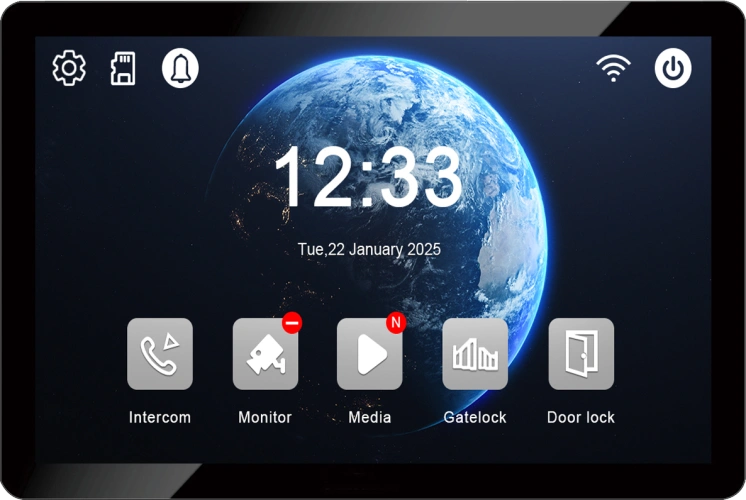
1. Station principale (moniteur intérieur)
C'est l'unité centrale généralement située à l'intérieur du bâtiment. Elle permet aux utilisateurs de :
- Initier ou recevoir des appels
- Déverrouiller l'entrée à distance
- Voir les flux vidéo (si pris en charge)
- Communiquer avec les stations extérieures ou d'autres unités intérieures
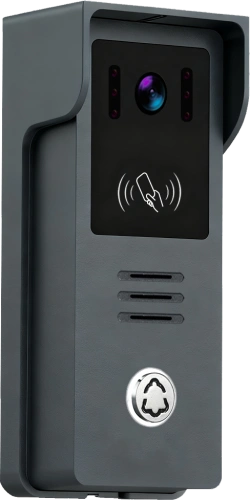
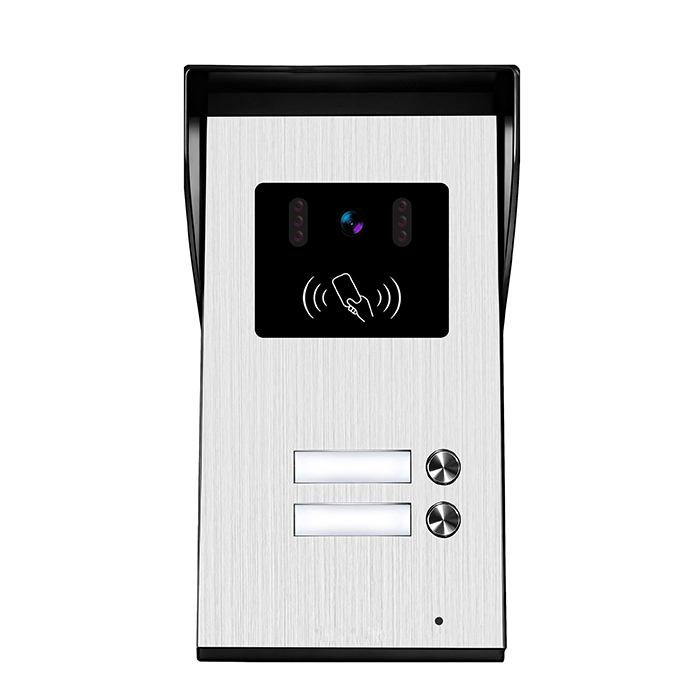
2. Station extérieure (unité de sonnette)
Installée aux points d'entrée comme les portails ou les portes, cette unité comporte :
- Microphone et haut-parleur
- Caméra (pour les interphones vidéo)
- Bouton d'appel
- Vision nocturne (optionnelle)
3. Alimentation électrique
Les systèmes d'interphone sans fil nécessitent généralement une source d'alimentation :
- Alimenté par batterie (rechargeable ou remplaçable)
- Alimenté en courant alternatif (via adaptateur secteur)
- ID: PoE (Power over Ethernet) – pour les systèmes hybrides câblés-sans fil
4. Module de connectivité
C'est le cœur de la fonctionnalité « sans fil ». Il gère la communication en utilisant :
- WiFi
- Fréquence radio (RF)
- Bluetooth
- DECT (Télécommunications sans fil numériques améliorées)
- Réseaux cellulaires (4G/5G) ou LAN
5. Application mobile ou plateforme cloud (optionnelle)
Les interphones sans fil modernes offrent un accès à distance via des applications smartphone, permettant aux utilisateurs de :
- Recevoir des notifications
- Voir la vidéo en temps réel
- Déverrouiller les portes à distance
- Consulter l'historique vidéo (cloud ou stockage local)
Tableau récapitulatif des composants
| Composant | Fonction |
|---|---|
| Moniteur intérieur | Communication centrale à l'intérieur de la propriété |
| ID: Unité extérieure | Interface visiteur aux points d'entrée |
| Connectivité | Lien sans fil (WiFi, RF, etc.) |
| Alimentation électrique | Alimente le système (batterie, AC, PoE) |
| Accès application/cloud | Contrôle et surveillance à distance |
Comment fonctionnent les systèmes d'interphone sans fil : processus étape par étape
Comprendre le flux de travail aide les utilisateurs finaux et les acheteurs B2B à évaluer les performances du système et le potentiel d'intégration.
Étape 1 : Le visiteur initie le contact
Le visiteur appuie sur le bouton d'appel sur le unité extérieure, qui envoie un signal au moniteur intérieur (ou plusieurs moniteurs dans le cas de systèmes multi-pièces).
Étape 2 : Transmission instantanée
Le système utilise des protocoles sans fil (par exemple, WiFi, RF) pour transmettre le signal. S'il prend en charge la vidéo, la caméra s'active et envoie un flux en direct vers le moniteur intérieur ou l'application mobile.
Étape 3 : Communication en temps réel
Le résident ou l'employé répond à l'appel, initiant une communication bidirectionnelle une communication bidirectionnelle via des microphones et haut-parleurs intégrés.
Étape 4 : Contrôle d'accès à distance
Si le système le permet, l'utilisateur peut déverrouiller à distance ouvrir la porte ou la grille via :
- Un bouton sur le moniteur intérieur
- Une application smartphone
- Une commande vocale (si intégrée à Alexa, Google Assistant)
Étape 5 : Enregistrement ou stockage cloud optionnel
Les interphones avancés peuvent enregistrer la vidéo ou l'audio et stocker les données localement (carte SD) ou dans le cloud, renforçant ainsi la sécurité.
Diagramme de flux de travail (basé sur du texte)
Copier en JSON
[Le visiteur appuie sur le bouton]
Indicateurs clés de performance (KPI) pour les acheteurs B2B
| KPI | Importance |
|---|---|
| Force du signal et portée | Assure une communication stable sur des distances variées |
| Temps de latence | Influence la sensation de communication en temps réel |
| Autonomie de la batterie | Essentiel pour les unités extérieures sans alimentation filaire |
| Intégration d'applications | Améliore l'utilisabilité et l'attrait moderne |
| Qualité audio/vidéo | Affecte la clarté et le professionnalisme |
Par exemple, un gestionnaire d'entreprise ou de biens immobiliers à la recherche d'un système d'interphone sans fil évolutif devrait envisager des solutions offrant :
- Accès multi-utilisateurs
- Surveillance basée sur le cloud
- Intégration avec les systèmes de contrôle d'accès
- Options de personnalisation de la marque pour les revendeurs ou les promoteurs immobiliers
Un partenaire fiable est FARHD, un fabricant leader en OEM/ODM de systèmes d'interphones vidéo complets. Avec plus de deux décennies d'expérience, FARHD propose des solutions complètes, des modules LCD aux interphones entièrement équipés — idéaux pour les distributeurs, revendeurs et intégrateurs de systèmes à la recherche de systèmes d'interphones sans fil de haute qualité.
Types de technologies d'interphones sans fil
Les systèmes d'interphones sans fil diffèrent considérablement en fonction de la technologie de communication sous-jacente. Comprendre ces technologies est crucial pour les acheteurs B2B, les intégrateurs de systèmes et les revendeurs qui souhaitent proposer la solution adaptée à des cas d'utilisation spécifiques.
1. Systèmes d'interphones basés sur WiFi
Ces systèmes utilisent votre réseau Réseau WiFi existant pour connecter les unités intérieures et extérieures, et souvent pour s'intégrer à des applications mobiles.
Avantages :
- Transmission audio et vidéo de haute qualité
- Facile à installer en utilisant le WiFi domestique ou de bureau existant
- Intégration d'application mobile pour un accès à distance
- Stockage cloud et compatibilité avec les maisons intelligentes
Limites :
- Dépend de la force du signal Wi-Fi
- Risque de latence ou de déconnexion si le réseau est instable
2. DECT (Digital Enhanced Cordless Telecommunications)
Les interphones basés sur DECT utilisent une bande de fréquences dédiée (1,9 GHz), offrant une communication stable sans interférence avec d'autres appareils sans fil.
Avantages :
- Signal fort et sécurisé
- Non affecté par la congestion WiFi ou Bluetooth
- Idéal pour les environnements commerciaux avec de multiples appareils sans fil
Limites :
- Portée limitée par rapport à la RF longue portée
- Moins courant dans les applications résidentielles
3. Systèmes d'interphones à fréquence radio (RF)
Ces systèmes utilisent des fréquences radio UHF ou VHF pour transmettre les signaux vocaux. Ils sont souvent utilisés dans les installations industrielles ou à grande échelle.
Avantages :
- Communication longue portée (jusqu'à plusieurs kilomètres)
- Pas besoin de WiFi ou d'internet
- Robuste et fiable en extérieur
Limites :
- Support vidéo limité
- Principalement audio dans la plupart des cas
- Restrictions réglementaires sur l'utilisation des fréquences dans certaines régions
4. Systèmes d'interphones sur réseau mobile (4G/5G)
Certains interphones haut de gamme utilisent des réseaux cellulaires pour permettre une connectivité globale, idéale pour les sites distants ou là où le WiFi est peu fiable.
Avantages :
- Fonctionne partout avec une couverture 4G/5G
- Idéal pour les propriétés éloignées, les fermes ou les chantiers de construction
- Alertes en temps réel et accès via application
Limites :
- Nécessite une carte SIM et un plan de données
- Coûts d'exploitation plus élevés
Tableau de comparaison des technologies
| Technologie | Gamme | Prise en charge vidéo | Intégration d'applications | Idéal pour |
|---|---|---|---|---|
| WiFi | Moyenne (50 m) | ✅ Oui | ✅ Oui | Maisons, appartements, bureaux |
| DECT | Moyenne (50 m) | ❌ Non | ❌ Limitée | Immeubles de bureaux, écoles |
| RF | Longue (1–5 km) | ❌ Non | ❌ Non | Entrepôts, usines, utilisation extérieure |
| 4G/5G | Illimitée | ✅ Oui | ✅ Oui | Sites distants, grands domaines |
Interphone sans fil vs. Interphone filaire : Différences clés
Lorsqu'il s'agit de choisir entre sans fil et des filaire des systèmes d'interphones, les deux présentent des avantages et des limitations distincts. Pour les distributeurs et revendeurs B2B, comprendre ces différences aide à aligner les offres de produits sur les besoins des clients.
Installation
| Fonctionnalité | Interphone sans fil | Interphone filaire |
|---|---|---|
| Installation | Rapide et facile | Nécessite du câblage et plus de configuration |
| Flexibilité | Élevée – portable et évolutif | Fixe – plus difficile à déplacer |
| Coût | Moins de main-d'œuvre initiale | Coûts d'installation plus élevés |
Performance
| Fonctionnalité | Interphone sans fil | Interphone filaire |
|---|---|---|
| Stabilité du signal | Dépendant de la qualité du réseau | Très stable et constant |
| Qualité audio/vidéo | Peut varier avec le réseau | Généralement plus élevée et plus fiable |
| Source d'alimentation | Batterie ou AC | Généralement alimenté par câblage |
Entretien
| Fonctionnalité | Interphone sans fil | Interphone filaire |
|---|---|---|
| Dépannage | Peut nécessiter des diagnostics réseau | Généralement lié au matériel |
| Flexibilité de mise à niveau | Facile à mettre à jour ou à remplacer | Plus complexe à rétrofitter |
Adéquation aux cas d'utilisation
| Application | Système recommandé |
|---|---|
| Maisons intelligentes | Interphone sans fil |
| Installations de haute sécurité | Interphone filaire |
| Propriétés locatives | Sans fil (facile à désinstaller) |
| Nouvelles constructions | Filaire (meilleure intégration) |
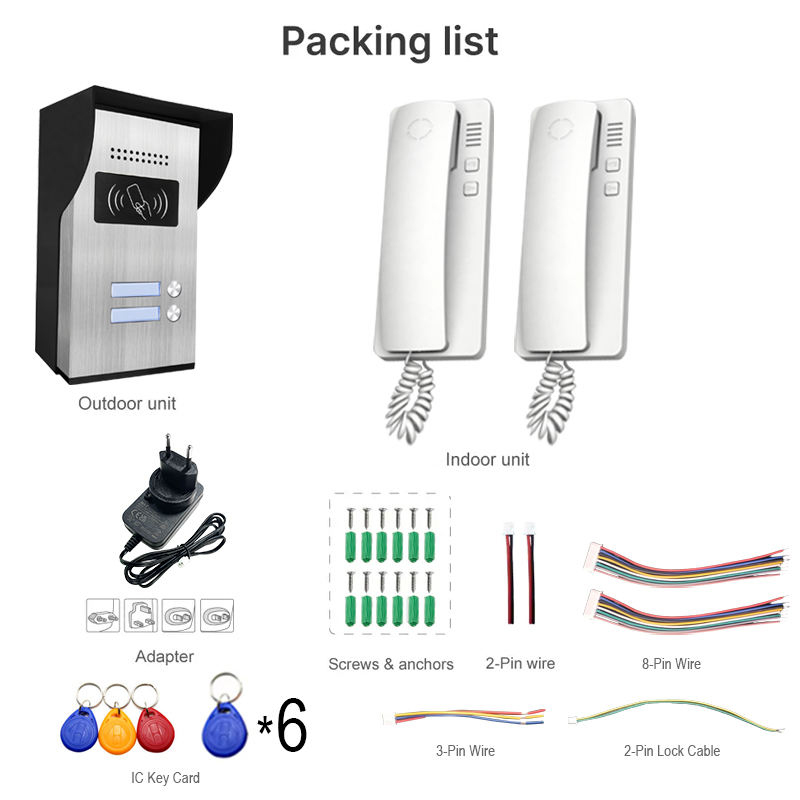
Avantages des systèmes d'interphones sans fil en usage résidentiel et commercial
Les systèmes d'interphones sans fil sont rapidement devenus un choix privilégié pour les est disponible sur le marché. Ces systèmes servent aussi bien les propriétaires et des les entreprisesapplications résidentielles et commerciales, en particulier grâce à leur flexibilité et à leurs fonctionnalités modernes.
Principaux avantages pour l'usage résidentiel
- Installation facile
Pas de perçage ou de découpe de murs ; idéal pour les installations DIY et les appartements. - Accès à distance
Contrôlez qui entre chez vous même en votre absence. - Intégration domotique
Compatible avec des plateformes comme Amazon Alexa et Google Home. - Sécurité et surveillance
Surveillez les enfants, les personnes âgées ou les livraisons de colis. - Extensibilité
Ajoutez plus de moniteurs intérieurs ou d'unités extérieures selon les besoins.
Principaux avantages pour l'usage commercial
- Amélioration de la sécurité
Vérifiez les visiteurs avant d'accorder l'accès aux installations. - Efficacité opérationnelle
Communication rapide entre départements, étages ou bâtiments. - Image de marque
Les interphones vidéo à l'entrée principale présentent une image moderne et professionnelle. - Gestion à distance
Parfait pour les gestionnaires de biens ou les équipes de sécurité gérant plusieurs sites. - Rentabilité
Coûts d'installation et de maintenance inférieurs par rapport aux systèmes filaires.
Applications réelles
| 📦 Cas d'utilisation par secteur | Exemple d'application |
|---|---|
| Immobilier | Contrôle d'accès aux appartements et journalisation des visiteurs |
| L'hospitalité | Communication des chambres d'hôtel vers le hall |
| L'éducation | Entrée sécurisée dans les écoles et crèches |
| Soins de santé | Stations d'infirmières connectées aux chambres des patients |
| Logistique | Coordination du personnel dans de grandes installations d'entrepôts |
Si vous êtes un intégrateur de systèmes ou une entreprise à la recherche de solutions OEM/ODM pour interphones sans fil, FARHD propose une fabrication experte et des services de personnalisation complets. FARHD est un nom de confiance dans la technologie d'interphones intelligents, offrant :
- Développement de produits personnalisés pour interphones vidéo sans fil
- Intégration complète de Modules LCM, LCD et caméra
- Fabrication des composants de base aux produits finis
- Soutien solide pour l’étiquetage blanc la marque privée et le branding
Leurs systèmes sans fil sont soutenus par des certifications internationales et alimentés par une R&D interne, garantissant des solutions prêtes pour l'avenir pour les distributeurs, grossistes et promoteurs immobiliers.
Meilleurs fabricants OEM/ODM de systèmes d'interphones sans fil
Lorsque vous approvisionnez des systèmes d'interphones sans fil pour la revente, la distribution ou l'intégration, choisir un fabricant OEM/ODM fiable est essentiel. Le bon partenaire garantit la qualité des produits, l'efficacité de la chaîne d'approvisionnement et des capacités de personnalisation alignées sur votre marque et vos besoins du marché.
Voici une liste sélectionnée des principaux fabricants d'interphones sans fil à l'échelle mondiale, avec un accent particulier sur FARHD, le fournisseur OEM/ODM le plus fiable en Chine.
1. FARHD (Chine) – Le fabricant d'interphones OEM le plus fiable en Chine
Shenzhen FARHD Tech Co., Ltd. est un fabricant leader en OEM/ODM spécialisé dans des solutions d'interphones à spectre complet — des Modules d'affichage LCD modules LCD aux systèmes d'interphone vidéo sans fil.
Pourquoi FARHD ?
- Intégration verticale complète: De LCM/LCD à l'assemblage final, garantissant une qualité inégalée.
- Portée mondiale: Leader du marché en Chine avec des positions de premier plan en Italie, en Corée et en Turquie.
- Infrastructure avancée: 13 lignes de production dans une installation de 5 500 m².
- Certifications: ISO 9001, CE, ROHS, FCC, SGS.
- Services de personnalisation: Prend en charge l'étiquetage privé, les interphones white-label et l'intégration d'applications personnalisées.
Idéal pour :
- Acheteurs B2B à la recherche de interphones vidéo à marque personnalisée
- Distributeurs ayant besoin de approvisionnement en interphones sans fil en vrac
- Promoteurs immobiliers souhaitant un contrôle d'accès intelligent sur mesure
🔗 En savoir plus sur les capacités OEM de FARHD sur le page Fabrication OEM/ODM
2. Aiphone (Japon)
Aiphone est une marque mondialement reconnue offrant des systèmes d'interphones premium, y compris des solutions sans fil. Ils sont connus pour leur qualité de construction supérieure et leur large gamme de produits.
Forces :
- Systèmes d'interphones vidéo avancés
- Forte reconnaissance de la marque
- Certifiés pour les applications commerciales et résidentielles
Limites :
- Coût plus élevé
- Personnalisation limitée pour les acheteurs de marque privée
3. Comelit Group (Italie)
Comelit propose des interphones élégants et hautement technologiques avec une excellente esthétique de design, parfaits pour les propriétés résidentielles et commerciales de luxe.
Forces :
- Design élégant
- Excellente intégration d'applications
- Forte présence en Europe
Limites :
- Moins flexible pour les besoins OEM/ODM
- Plus axé sur la vente de produits finis que sur l'approvisionnement B2B
4. 2N (République tchèque)
Filiale d'Axis Communications, 2N fournit des interphones IP avancés avec des fonctionnalités de cybersécurité robustes.
Forces :
- Systèmes IP évolutifs
- Fort dans les secteurs commercial et entreprise
- Intégration avec le contrôle d'accès et l'automatisation des bâtiments
Limites :
- Gamme de prix plus élevée
- Ciblé vers les acheteurs d'entreprise
Tableau de comparaison des fabricants
| Fabricant | Pays | Support OEM/ODM | Technologie sans fil | Idéal pour |
|---|---|---|---|---|
| FARHD | Chine | ✅ Complète | ✅ Oui | Distributeurs, intégrateurs, immobilier |
| Aiphone | Japon | ❌ Limitée | ✅ Oui | Résidentiel/commercial haut de gamme |
| Comelit | Italie | ❌ Limitée | ✅ Oui | Projets axés sur le style |
| 2N | Tchèque | ❌ Non | ✅ Oui | Systèmes d'entreprise et IP |
Pour les distributeurs et revendeurs à la recherche d'approvisionnement en systèmes d'interphones sans fil en vrac, FARHD est inégalé en efficacité en termes de coûts, scalabilitéet flexibilité de personnalisation.
Pour explorer la gamme complète de produits FARHD, incluant les systèmes d'interphone 4 fils, 2 fils et IP, visitez leur Catalogue des produits.
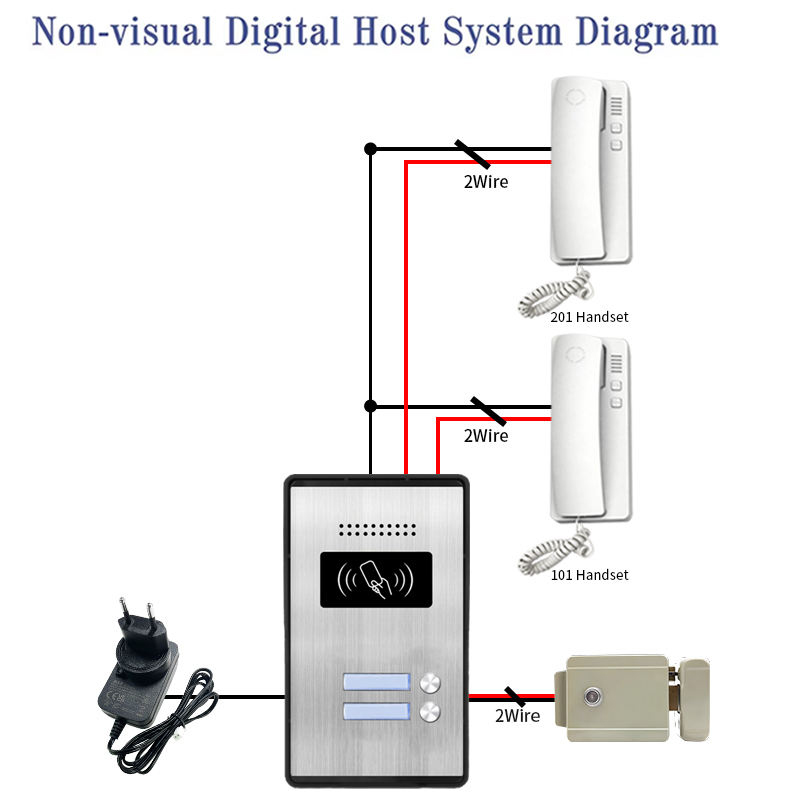
FAQ sur les systèmes d'interphone sans fil
Q1 : Les systèmes d'interphone sans fil peuvent-ils fonctionner sans internet ?
Oui, de nombreux interphones sans fil utilisent la RF, DECT ou Bluetooth, qui ne nécessitent pas d'internet. Cependant, les systèmes qui dépendent de WiFi ou d'applications mobiles nécessitent généralement une connexion internet pour une fonctionnalité complète, comme le déverrouillage à distance ou le streaming vidéo.
Q2 : Quelle est la portée typique d'un interphone sans fil ?
Cela dépend de la technologie utilisée :
- Basés sur WiFi: ~50 mètres en intérieur
- RF: Jusqu'à plusieurs kilomètres (idéal pour un usage industriel)
- Basés sur DECT: ~50–100 mètres
- Interphones 4G/5G: Pratiquement illimitée avec une couverture cellulaire
Q3 : À quel point les interphones sans fil sont-ils sécurisés ?
Les interphones sans fil modernes intègrent :
- Communication chiffrée
- Accès protégé par mot de passe
- Stockage cloud sécurisé
- Alertes de sabotage
Pour un usage professionnel, il est recommandé de choisir des systèmes qui supportent le cryptage AES et des l'authentification à deux facteurs.
Q4 : Puis-je utiliser un système d'interphone sans fil dans un immeuble à plusieurs unités ?
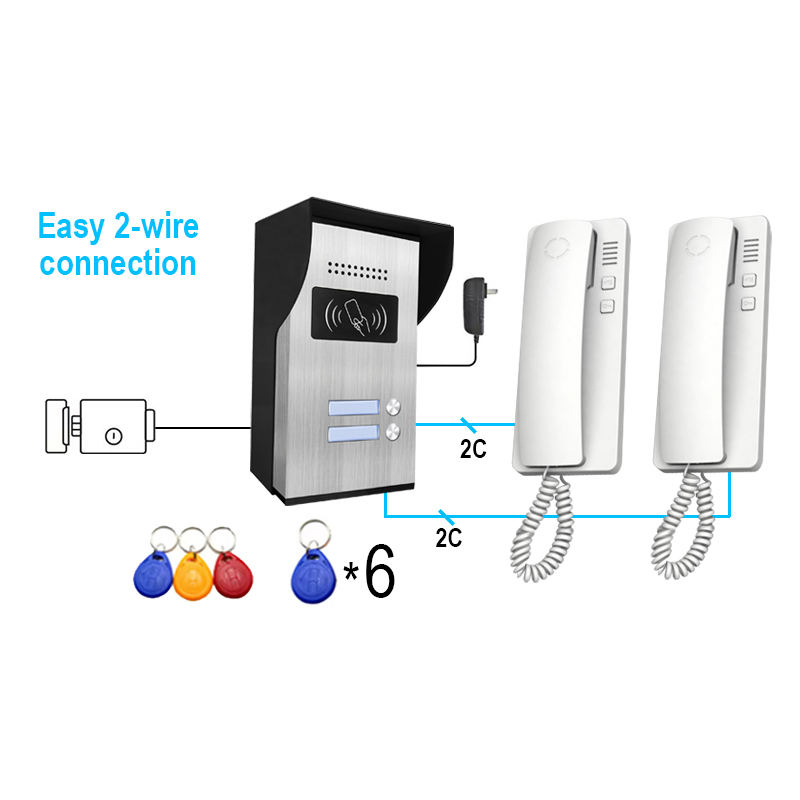
Absolument. De nombreux systèmes prennent en charge des fonctions multi-abonnés, permettant à chaque locataire d'avoir son propre poste intérieur connecté à une station extérieure partagée.
Pour de telles applications, des fabricants comme FARHD proposent des solutions complètes Les systèmes d’interphone multi-appartements qui sont scalables et personnalisables.
🔗 Explorez les solutions d'interphone multi-unités de La série de villas 4 fils de FARHD
Q5 : Comment devenir distributeur de systèmes d'interphone sans fil ?
Pour devenir distributeur :
- Identifiez des fabricants OEM/ODM réputés comme FARHD
- Demandez des catalogues de produits et MOQ (Quantité minimale de commande)
- Discutez des exigences en matière de marque, d'emballage et de certification
- Passez votre première commande en gros
- Collaborez avec le fabricant pour le support après-vente et la garantie
📞 Intéressé par un partenariat ? Contacter FARHD pour des tarifs B2B, des options de marque privée et une consultation technique.
Réflexions finales et appel à l'action
Les systèmes d'interphone sans fil transforment la manière dont les maisons, les entreprises et les institutions gèrent l'accès, la communication et la sécurité. Que vous soyez intégrateur de systèmes, grossiste ou promoteur immobilier, investir dans la bonne technologie et le bon partenaire de fabrication peut faire toute la différence.
Partenariat avec FARHD dès aujourd'hui
Avec plus de 20 ans d'expérience en R&D et en fabrication, FARHD propose des solutions d'interphone sans fil de premier plan avec des capacités complètes OEM/ODM. Des composants de base aux systèmes complets, FARHD vous accompagne à chaque étape.
👉 Visitez le À propos de nous pour découvrir pourquoi les meilleures marques font confiance à FARHD pour la qualité, l'innovation et la scalabilité.
Vous souhaitez démarrer votre activité d'interphones ou élargir votre gamme de produits ?
📩 Entrez en contact avec FARHD pour une consultation gratuite et un devis personnalisé.
Vous pourriez également être intéressé par
-

FARHD to Showcase All-Climate Technology at 2026 China Security Expo, Empowering Smart Communities in Northern China
From November 3 to 6, 2026, FARHD, a global leader in smart security and communication solutions, will unveil its full range of products deeply optimized for the harsh winter conditions of northern China at the 18th China International Social Public Security Products Expo (Security China). Under the theme “Digital Intelligence World, Total Security,” the expo…
-

FARHD to Showcase All-Climate Hard-Tech Solutions at Securika Moscow 2026
From April 22 to 24, 2026, FARHD, a global leader in smart security and communication solutions, will unveil its full range of products engineered for extreme climates at Securika Moscow 2026, held at Crocus Expo in Moscow, Russia. At booth A-9101, FARHD will present its smart intercom, access control, and smart home solutions—all deeply optimized…
-

FARHD Honored with Multiple Prestigious Awards in China’s Building Intercom Industry, 28 Years of Deep Engagement in the Chinese Market Solidifying Its Position as a Leading Brand
Recently, in the annual selection event jointly organized by the China Security and Protection Industry Association and multiple authoritative media outlets, FARHD, by virtue of its profound industry experience, outstanding technological innovation capabilities, and extensive market recognition, was awarded the prestigious “Most Influential Brand in China’s Building Intercom Industry” . These accolades not only affirm FARHD’s 28…
-

FARHD Honored with Multiple Prestigious Awards in China’s Building Intercom Industry, 28 Years of Deep Engagement in the Chinese Market Solidifying Its Position as a Leading Brand
Recently, in the annual selection event jointly organized by the China Security and Protection Industry Association and multiple authoritative media outlets, FARHD, by virtue of its profound industry experience, outstanding technological innovation capabilities, and extensive market recognition, was awarded the prestigious “National Top 10 Quality Brands in the Security Industry” . These accolades not only affirm FARHD’s…