Every Detail Matters for Reliable Intercom Systems: Inside FARHD’s Production Discipline
novembre 23, 2026
Partager cet article
Reliability in a video intercom system is rarely decided by a single dramatic feature. It is decided by a long series of small decisions—how a solder joint is formed, whether a gasket sits correctly, whether a unit was tested for a full day before it was packed, whether the documentation that accompanies a shipment matches the exact model inside the box. Each decision is minor on its own. Together, they determine whether a building entrance works for a decade or generates a list of complaints within a year.
FARHD has manufactured video door phones and intercom systems since 1998, and over 28 years we have learned that reliability is not something you add at the end of production. It is the cumulative result of a strict production process, full inspection, stable quality control, and a manufacturer willing to stand behind every unit it makes. This article explains what those commitments actually look like on the production floor—and why they matter to distributors, integrators, and developers who specify our products.
Strict Production Process: Where Reliability Is Built
A production process is only as strong as its weakest gate. At FARHD, quality control runs through the process rather than sitting at the end of it.
Incoming Component Inspection
Before a component enters production, it is checked against specification. This matters because a supplier’s out-of-spec batch should not become FARHD’s field failure. Incoming inspection is the first gate, and it is the one that protects everything downstream.
In-House Core Component Production
FARHD specializes in full in-house R&D and production of core components—TFT LCD screens, driver boards, and camera modules—as well as complete villa and apartment building intercom systems. This is the structural difference between a source factory and an assembler: the components most likely to cause early failures are the ones we control directly, and can therefore test and correct at the source rather than accepting a third party’s assurance.
SMT and Assembly Process Control
Circuit board production runs through controlled stages: solder paste printing with managed paste storage, pick-and-place with verified feeders, reflow with documented temperature profiles per product, automated optical inspection after reflow, and ESD-controlled manual assembly for through-hole components and connectors. Each stage has a defined standard and a defined check—not a generic setting applied to every board.
Functional Testing Before Aging
Before a unit enters the aging period, it is functionally tested to confirm it performs its intended functions. Units that fail here never proceed. This ensures that the aging test measures stability, not basic functionality.
The 24-Hour Aging Test
Every unit runs continuously under power for a full day before shipment. Continuous operation exercises components in a way that a short functional test cannot: thermal buildup, sustained current draw, and the cumulative effect of hours of operation. Units with marginal defects tend to reveal themselves during this window. Audio and video performance are verified during the test, and units that fail are removed, investigated, and either reworked or rejected.
Final Inspection and Packaging
After aging, units undergo post-test functional verification and cosmetic inspection, then are packed in packaging designed to protect them in transit—cartons sized correctly, internal cushioning matched to the product, and ESD-safe packaging for boards and modules where applicable.
Each gate reduces the probability that a defect reaches the next one. By the time a unit is packed for shipment, it has passed through multiple independent checks.
Full Inspection: Every Unit, Not a Sample
The phrase “full inspection” is used loosely in manufacturing marketing. At FARHD, it means what it says: inspection is applied to every unit, not sampled from a batch.
The distinction matters commercially. A sampled inspection tells you the probability that a batch is sound. A full inspection tells you that the specific unit in your customer’s building was checked. For a distributor carrying warranty obligations and an integrator facing callbacks, that difference is the whole point.
Full inspection covers incoming components, in-process boards, functional testing before aging, aging performance, post-aging verification, and final cosmetic inspection. No unit skips a gate because the batch “looked fine.”
Stable Quality Control: Consistency Is the Product
In a 200-unit apartment building, consistency is not a feature—it is the product. Every monitor should behave the same way, every outdoor station should read cards the same way, and the thousandth unit should perform like the first.
Stable quality control comes from process discipline rather than from inspection intensity. Three factors support it at FARHD:
Vertical integration. In-house production of core components means the variables that most affect performance—display quality, camera calibration, driver board behavior—are controlled rather than sourced from varying suppliers.
Documented processes. Reflow profiles, test procedures, and inspection standards are defined per product and followed consistently, rather than adjusted by operator preference.
Traceability. Boards and components are traceable through production, so that if an issue is identified, the affected units can be located rather than guessed at.
The result is a shipped population that behaves predictably—which is what “stable quality” actually means in the field.
On-Time Delivery: A Commitment, Not an Optimistic Estimate
Lead time is a function of capacity and planning. As a source factory, FARHD controls both.
Production capacity supports standard product supply and customized orders on the same production floor, so a mixed order spanning several product categories can be produced and consolidated rather than coordinated across multiple factories.
Ready stock is available for fast-moving product lines—the 10″ IP video intercom, villa outdoor units, and other high-demand products—which matters when a project accelerates or a distributor needs to replenish inventory without waiting for a production run.
Customized orders are scheduled with a realistic assessment of scope and timeline, provided by the engineering team that will actually implement the customization rather than relayed through an intermediary.
On-time delivery is not a promise made at the quotation stage and forgotten at production. It is a schedule the factory can see and manage.
Complete Certificates: Documentation That Matches the Product
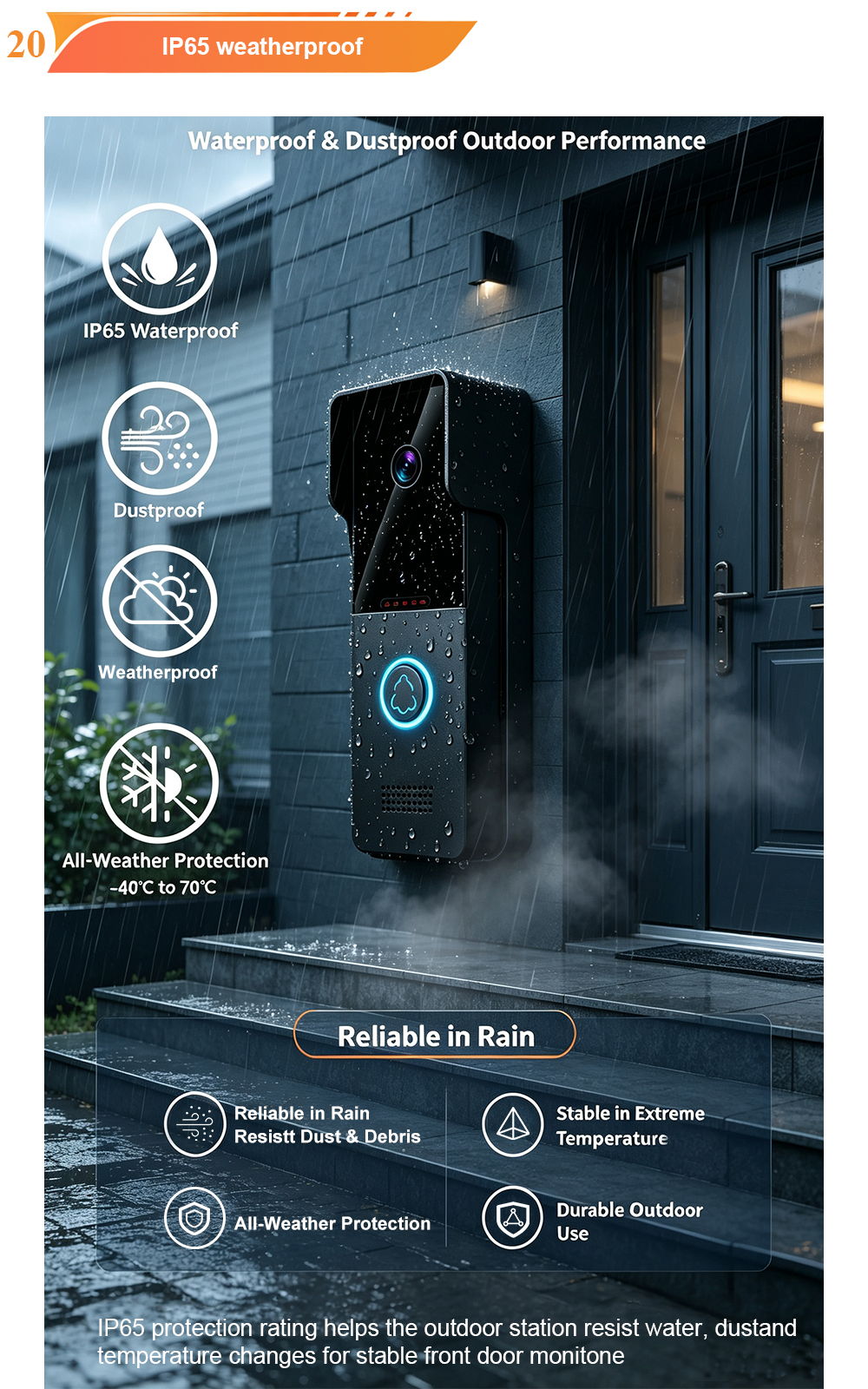
Certification is easy to display and harder to substantiate. FARHD products hold international certifications including CE, FCC, RoHS, IP65 water resistance, and EMC—and the documentation is provided for the specific model and hardware revision being purchased.
This matters because a product-family statement that predates a component change is not equivalent evidence. Buyers evaluating a supplier should request the certification records matched to the exact SKU, and confirm that the tested configuration corresponds to the shipped configuration. FARHD supports this request as a standard part of the partner evaluation process.
Flexible OEM & ODM: Customization Beyond Branding
Every market has its own requirements—wiring standards, interface languages, branding expectations, packaging needs. FARHD’s OEM and ODM services cover:
- Customized software and hardware development
- UI design, including multi-language interfaces and market-specific terminology
- Functional module adjustments to match project or market requirements
- Tailored packaging solutions for private-label product lines
Because core components are produced in-house, customization can extend to display specifications, driver board configuration, and functional behavior—not just logos and packaging. For distributors building a private-label line and integrators sourcing for specific project requirements, this depth is what makes customization meaningful rather than cosmetic.
SKD (semi-knocked-down) solutions are also available for assembly factories across Europe, the Middle East, South America, Southeast Asia, the United States, Russia, India, Iran, Turkey, South Korea, and Italy, helping reduce both production and tariff costs while maintaining consistent quality.
Source Factory Since 1998: What the Date Means
FARHD was founded in 1998 and has spent 28 years focused on video door phones and intercom systems. That focus is the basis of everything above.
The product line covers IP intercom systems for villas and apartments, 2-wire IP systems, 4-wire CVBS and AHD systems, analog apartment systems, wireless video doorbells, audio intercom systems, and various kits—manufactured on the same production floor, under the same quality system, and supported by the same technical team.
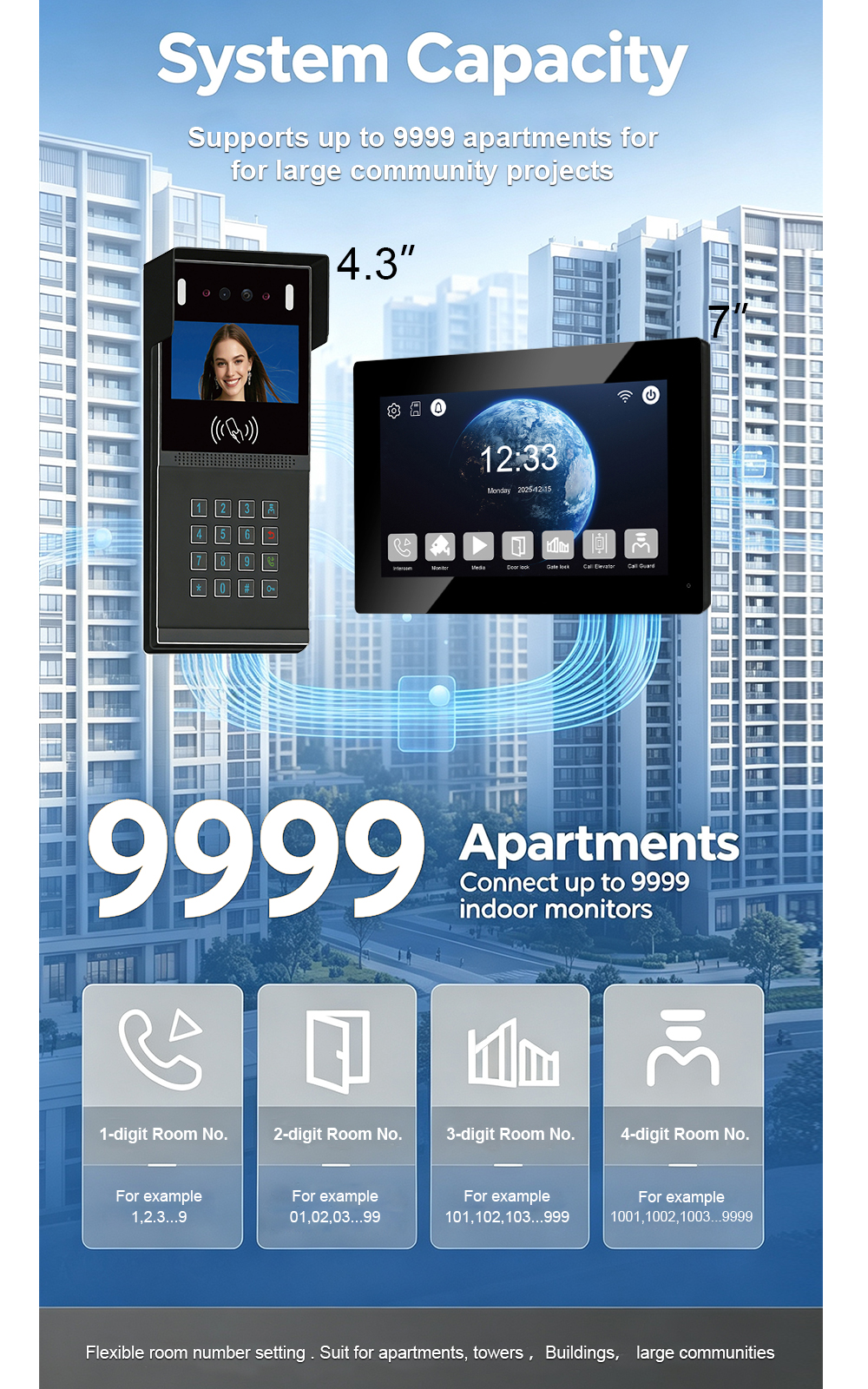
Supported by 28 direct sales branches across China, FARHD has completed over 10,000 large-scale building video intercom projects, including ultra-large communities with 1,000, 3,000, and even over 5,000 households. At that scale, room numbering, directory generation, card lifecycle management, and delivery documentation are not minor details—they are the foundation of a system that either works smoothly for thousands of residents or generates complaints daily. That experience informs how we approach quality, documentation, and support.
We Stand Behind Every Unit We Make
The final commitment is the one that matters most: we stand behind every unit we make.
In practice, that means a hassle-free after-sales service system. Upon product delivery, a dedicated technical support group is established to assist with programming, device installation, and wiring connections throughout the process. It means taking responsibility when a field issue is reported, investigating it at the component level rather than relaying a supplier’s assurance, and resolving it.
For distributors, integrators, and developers, that commitment is the difference between a supplier and a manufacturing partner. A supplier sells a product. A partner stands behind it.
Send a Message for Your Project Quote
If you are evaluating a video intercom supplier for an upcoming project, the most useful first step is a conversation about what you are building. Tell us the building type, the number of units and entry points, the access methods you need, and the timeline you are working to—and we can recommend the configuration that fits, along with the lead time and commercial terms.
Whether you need standard products from ready stock, OEM or ODM customization for a private-label line, or SKD cooperation for local assembly, FARHD can support your project from core components to global delivery.
FARHD at a glance:
- Founded 1998, with 28 years focused on video door phones and intercom systems
- Full in-house R&D and production—TFT LCD screens, driver boards, camera modules, and complete systems
- Strict production process and full inspection on every unit
- 24-hour aging test before shipment
- International certifications: CE, FCC, RoHS, IP65 water resistance, and EMC
- 28 direct sales branches across China
- Over 10,000 large-scale building video intercom projects completed
- Flexible OEM/ODM and SKD cooperation available worldwide
Send us a message for your project quote.
We look forward to building a strong partnership with you and jointly shaping the future of smart living.
📩 Email: [email protected]
🌐 Website: www.farhd.com
📱 WhatsApp: +86 188 2370 9809 / +86 199 2545 1918
Vous pourriez également être intéressé par
-
Rigorous Aging Test for FARHD Villa Video Intercom Outdoor Stations: Continuous Burn-In Before Every Shipment
A villa outdoor station has one job that cannot be compromised: it must work when someone is standing at the gate. Not when the showroom lights are on, not when the unit is fresh out of the box on day one—but on the hundredth day, in the rain, at night, when a resident is expecting…
-
FARHD Video Intercom Performance Test: 100m Ethernet Distance, Crystal Clear Video, and -45°C Extreme Temperature Reliability
Performance claims are easy to make and harder to prove. A datasheet can state that a system supports long cable runs. It can list an operating temperature range. It can describe audio and video quality in general terms. What it cannot do is show what happens when a 100-meter Ethernet cable carries a call between…
-
Smart Video Intercom: See. Talk. Unlock. A Smarter and Safer Living Experience
Every interaction at a building entrance comes down to three actions. Someone outside asks to be let in. Someone inside needs to see who it is, speak to them, and decide. That is the whole of it—see, talk, unlock—and yet the difference between a system that does these three things well and one that does…
-
FARHD 7″ Villa Kit Video Door Phone: A Complete, Installation-Friendly Entry System for Villa Projects
A villa intercom project has a distinct set of requirements that a standard apartment system does not address. There is no shared lobby, no room list, and no property manager coordinating hundreds of units. Instead, there is a single household, often with several entry points—a main gate, a garden door, a garage—and an expectation that…