¿Cómo Funciona un Sistema de Intercomunicación Inalámbrico? Una Guía Completa para Compradores y Proveedores
17 de noviembre de 2025
Comparte este artículo
¿Qué es un sistema de intercomunicador inalámbrico?
Un sistema de intercomunicador inalámbrico es una solución de comunicación que permite a las personas en diferentes habitaciones, edificios o ubicaciones hablar entre sí sin necesidad de cableado físico. Estos sistemas se utilizan ampliamente en:
- Residencias
- Complejos de apartamentos
- Oficinas comerciales
- Almacenes y fábricas
- Hospitales y escuelas
- Puntos de entrada de portones y control de acceso
Son particularmente útiles en edificios modernos o renovaciones donde instalar sistemas cableados puede ser disruptivo o costoso.
Características clave:
- Comunicación de audio bidireccional
- Capacidades de video (en intercomunicadores de video)
- Desbloqueo remoto de puertas
- WiFi, DECT, o conectividad basada en RF
- Integración con aplicación móvil
Casos de uso:
| Caso de uso | Ejemplo de aplicación |
|---|---|
| Residencial | Intercomunicador de puerta principal, acceso a portones, monitor de bebé |
| Comercial | Comunicación oficina a oficina, gestión de visitantes |
| Industrial | Puntos de entrada de almacenes, coordinación de personal |
| Gestión de la propiedad | Sistemas de entrada para apartamentos multiunidad |
Componentes principales de un sistema de intercomunicador inalámbrico
Aunque los intercomunicadores inalámbricos eliminan la necesidad de cables físicos, aún incluyen varios componentes esenciales que trabajan juntos para habilitar una comunicación fluida.
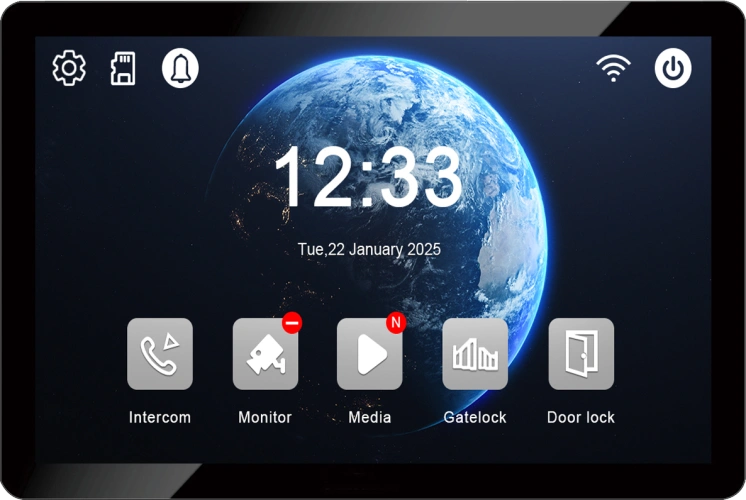
1. Estación principal (monitor interior)
Esta es la unidad central típicamente ubicada dentro del edificio. Permite a los usuarios:
- Iniciar o recibir llamadas
- Desbloquear la entrada de forma remota
- Ver transmisiones de video (si se admite)
- Comunicarse con estaciones exteriores u otras unidades interiores
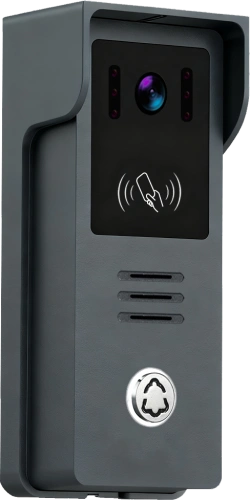
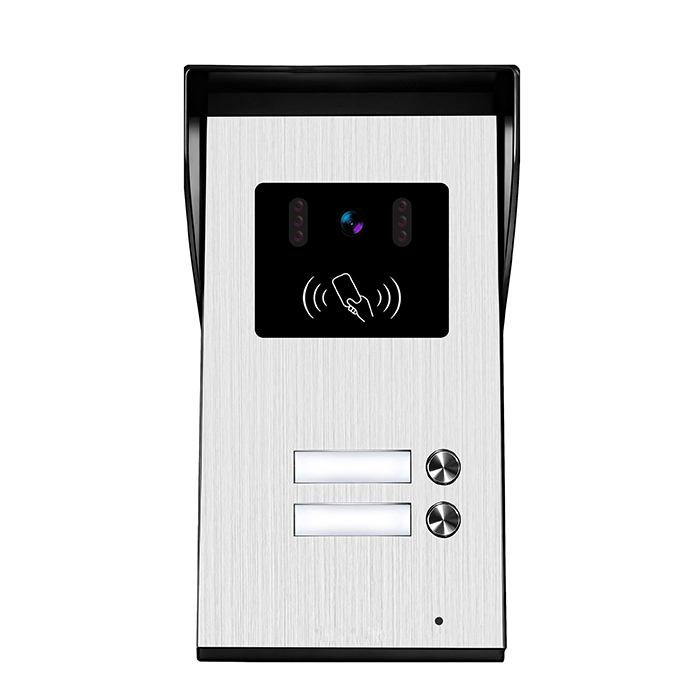
2. Estación exterior (unidad de timbre)
Instalada en puntos de entrada como portones o puertas, esta unidad cuenta con:
- Micrófono y altavoz
- Cámara (para intercomunicadores de video)
- Botón de llamada
- Visión nocturna (opcional)
3. Fuente de alimentación
Los sistemas de intercomunicador inalámbricos generalmente requieren una fuente de energía:
- Funciona con pilas (recargable o reemplazable)
- Alimentada por AC (a través de adaptador de energía)
- PoE (Power over Ethernet) – para sistemas híbridos cableados-inalámbricos
4. Módulo de conectividad
Este es el corazón de la función “inalámbrica”. Gestiona la comunicación utilizando:
- WiFi
- Frecuencia de radio (RF)
- Bluetooth
- DECT (Telecomunicaciones inalámbricas digitales mejoradas)
- Redes celulares (4G/5G) o LAN
5. Aplicación móvil o plataforma en la nube (opcional)
Los intercomunicadores inalámbricos modernos ofrecen acceso remoto a través de aplicaciones para smartphones, lo que permite a los usuarios:
- Recibir notificaciones
- Ver video en tiempo real
- Abrir puertas de forma remota
- Revisar el historial de video (almacenamiento en la nube o local)
Tabla de resumen de componentes
| Componente | Función |
|---|---|
| Monitor interior | Comunicación central dentro de la propiedad |
| Unidad exterior | Interfaz para visitantes en los puntos de entrada |
| Conectividad | Enlace inalámbrico (WiFi, RF, etc.) |
| Fuente de alimentación | Alimenta el sistema (batería, CA, PoE) |
| Acceso a la aplicación/nube | Control y monitoreo remoto |
Cómo funcionan los sistemas de intercomunicación inalámbrica: proceso paso a paso
Comprender el flujo de trabajo ayuda tanto a los usuarios finales como a los compradores B2B a evaluar el rendimiento del sistema y el potencial de integración.
Paso 1: El visitante inicia el contacto
El visitante presiona el botón de llamada en el unidad exterior, lo que envía una señal al monitor interior (o múltiples monitores en el caso de sistemas multiroom).
Paso 2: Transmisión instantánea
El sistema utiliza protocolos inalámbricos (p. ej., WiFi, RF) para transmitir la señal. Si admite video, la cámara se activa y envía un flujo en vivo al monitor interior o a la aplicación móvil.
Paso 3: Comunicación en tiempo real
El residente o empleado responde a la llamada, iniciando comunicación bidireccional a través de micrófonos y altavoces integrados.
Paso 4: Control de acceso remoto
Si el sistema lo admite, el usuario puede desbloquear de forma remota la puerta o la puerta mediante:
- Un botón en el monitor interior
- Una aplicación para smartphone
- Comando de voz (si está integrado con Alexa, Google Assistant)
Paso 5: Grabación o almacenamiento en la nube opcional
Los intercomunicadores avanzados pueden grabar video o audio y almacenar los datos localmente (tarjeta SD) o en la nube, mejorando la seguridad.
Diagrama de flujo de trabajo (basado en texto)
Copiar JSON
[El visitante presiona el botón]
Indicadores clave de rendimiento (KPI) para compradores B2B
| KPI | Importancia |
|---|---|
| Fuerza de la señal y alcance | Garantiza una comunicación estable a distancias variadas |
| Latencia | Influye en la sensación de comunicación en tiempo real |
| Duración de la batería | Vital para unidades exteriores sin alimentación cableada |
| Integración de aplicaciones | Mejora la usabilidad y el atractivo moderno |
| Calidad de audio/video | Afecta la claridad y el profesionalismo |
Por ejemplo, un negocio o administrador de propiedades que busque un sistema de intercomunicación inalámbrica escalable debería considerar soluciones que ofrezcan:
- Acceso multiusuario
- Monitoreo basado en la nube
- Integración con sistemas de control de acceso
- Opciones de personalización de la marca para revendedores o desarrolladores inmobiliarios
Un socio confiable en este ámbito es FARHD, un fabricante líder de OEM/ODM de sistemas completos de intercomunicadores de video para puertas. Con más de dos décadas de experiencia, FARHD ofrece soluciones integrales desde módulos LCD hasta intercomunicadores con todas las funciones — ideales para distribuidores, revendedores e integradores de sistemas que buscan sistemas de intercomunicación inalámbrica de alta calidad.
Tipos de Tecnologías de Intercomunicación Inalámbrica
Los sistemas de intercomunicación inalámbrica difieren significativamente según la tecnología de comunicación subyacente. Comprender estas tecnologías es crucial para compradores B2B, integradores de sistemas y revendedores que deseen ofrecer la solución adecuada para casos de uso específicos.
1. Sistemas de Intercomunicación Basados en WiFi
Estos sistemas utilizan su red existente Red WiFi para conectar las unidades interiores y exteriores, y a menudo para integrarse con aplicaciones móviles.
Ventajas:
- Transmisión de audio y video de alta calidad
- Fácil de instalar utilizando el WiFi existente en el hogar u oficina
- Integración con aplicaciones móviles para acceso remoto
- Almacenamiento en la nube y compatibilidad con hogares inteligentes
Limitaciones:
- Dependiente de la intensidad de la señal WiFi
- Posible retraso o desconexión si la red es inestable
2. DECT (Telecomunicaciones Inalámbricas Digitales Mejoradas)
Los intercomunicadores basados en DECT utilizan una banda de frecuencia dedicada (1,9 GHz), ofreciendo una comunicación estable sin interferir con otros dispositivos inalámbricos.
Ventajas:
- Señal fuerte y segura
- No afectado por la congestión de WiFi o Bluetooth
- Ideal para entornos comerciales con múltiples dispositivos inalámbricos
Limitaciones:
- Alcance limitado en comparación con RF de largo alcance
- No tan común en aplicaciones residenciales
3. Sistemas de Intercomunicación de Frecuencia de Radio (RF)
Estos sistemas utilizan frecuencias de radio UHF o VHF para transmitir señales de voz. Se utilizan a menudo en instalaciones industriales o a gran escala.
Ventajas:
- Comunicación de largo alcance (hasta varios kilómetros)
- No requiere WiFi ni internet
- Robusto y confiable en entornos exteriores
Limitaciones:
- Soporte limitado de video
- Solo audio en la mayoría de los casos
- Restricciones regulatorias sobre el uso de frecuencias en algunas regiones
4. Sistemas de intercomunicación de red móvil (4G/5G)
Algunos intercomunicadores de gama alta utilizan redes celulares para habilitar conectividad global, ideal para sitios remotos o donde el WiFi es poco confiable.
Ventajas:
- Funciona en cualquier lugar con cobertura 4G/5G
- Ideal para propiedades remotas, granjas o sitios de construcción
- Alertas en tiempo real y acceso a través de aplicaciones
Limitaciones:
- Requiere tarjeta SIM y plan de datos
- Costos operativos más altos
Tabla de Comparación de Tecnologías
| Tecnología | Gama | Soporte de video | Integración de aplicaciones | Ideal para |
|---|---|---|---|---|
| WiFi | Medio (50 m) | ✅ Sí | ✅ Sí | Hogares, apartamentos, oficinas |
| DECT | Medio (50 m) | ❌ No | ❌ Limitada | Edificios de oficinas, escuelas |
| RF | Largo (1–5 km) | ❌ No | ❌ No | Almacenes, fábricas, uso exterior |
| 4G/5G | Ilimitado | ✅ Sí | ✅ Sí | Sitios remotos, grandes fincas |
Intercomunicación Inalámbrica vs. Intercomunicación Cableada: Diferencias Clave
Al elegir entre inalámbrico y con cable sistemas de intercomunicación, ambos tienen ventajas y limitaciones distintas. Para distribuidores y revendedores B2B, comprender estas diferencias ayuda a alinear las ofertas de productos con las necesidades de los clientes.
Instalación
| Característica | Intercomunicador inalámbrico | Intercomunicador cableado |
|---|---|---|
| Instalación | Rápida y fácil | Requiere cableado y más configuración |
| Flexibilidad | Alta – portátil y escalable | Fija – más difícil de reubicar |
| Coste | Menor mano de obra inicial | Mayores costes de instalación |
Rendimiento
| Característica | Intercomunicador inalámbrico | Intercomunicador cableado |
|---|---|---|
| Estabilidad de la señal | Dependiente de la calidad de la red | Muy estable y consistente |
| Calidad de audio/video | Puede variar con la red | Típicamente más alta y confiable |
| Fuente de energía | Batería o CA | Generalmente alimentado a través de cableado |
Mantenimiento
| Característica | Intercomunicador inalámbrico | Intercomunicador cableado |
|---|---|---|
| Solución de Problemas | Puede requerir diagnósticos de red | Generalmente relacionado con hardware |
| Flexibilidad de Actualización | Fácil de actualizar o reemplazar | Más complejo de retrofitting |
Adecuación para Casos de Uso
| Aplicación | Sistema recomendado |
|---|---|
| Casas inteligentes | Intercomunicador inalámbrico |
| Instalaciones de alta seguridad | Intercomunicador cableado |
| Propiedades de alquiler | Inalámbrica (fácil de desinstalar) |
| Nuevas Construcciones | Cableada (mejor integración) |
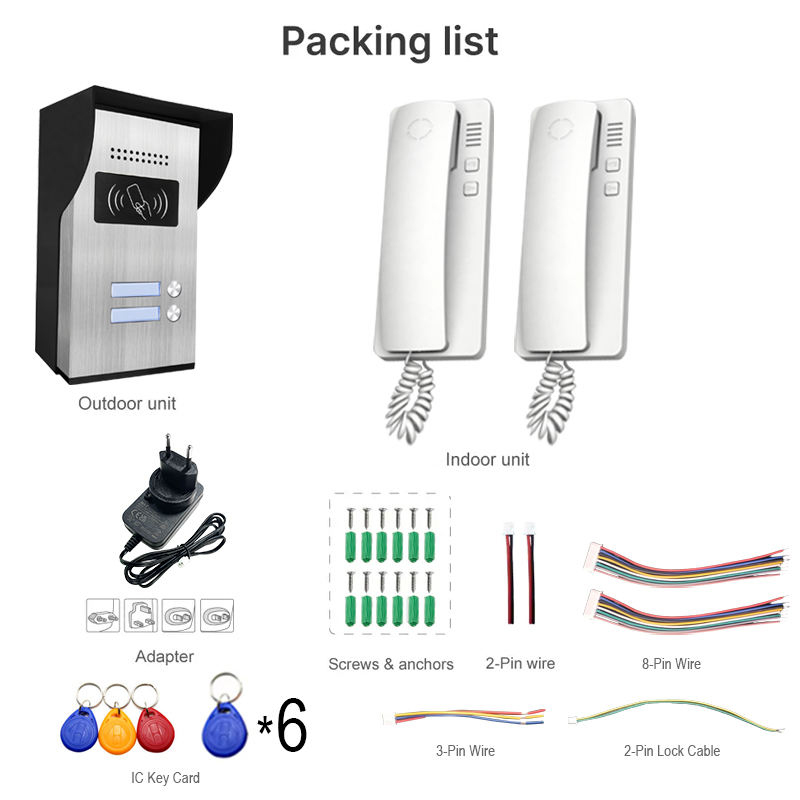
Beneficios de los Sistemas de Intercomunicación Inalámbrica en Usos Residenciales y Comerciales
Los sistemas de intercomunicación inalámbrica se han convertido rápidamente en una opción preferida tanto para propietarios de viviendas y empresas, especialmente debido a su flexibilidad y funciones modernas.
Principales beneficios para uso residencial
- Fácil instalación
Sin necesidad de perforaciones ni cortes en las paredes; ideal para instalaciones DIY y apartamentos. - Acceso remoto
Controle quién entra en su hogar incluso cuando no está presente. - Integración del hogar inteligente
Compatible con plataformas como Amazon Alexa y Google Home. - Seguridad y monitoreo
Monitoree a niños, miembros mayores de la familia o entregas de paquetes. - Capacidad de expansión
Agregue más monitores interiores o unidades exteriores según sea necesario.
Principales beneficios para uso comercial
- Seguridad mejorada
Evalúe a los visitantes antes de otorgar acceso a las instalaciones. - Eficiencia operativa
Comunicación rápida entre departamentos, pisos o edificios. - Imagen de marca
Los intercomunicadores de video en la entrada principal proyectan una imagen moderna y profesional. - Gestión remota
Perfecto para administradores de propiedades o equipos de seguridad que gestionan múltiples ubicaciones. - Rentabilidad
Menores costos de instalación y mantenimiento en comparación con sistemas cableados.
Aplicaciones en el mundo real
| 📦 Casos de uso por industria | Ejemplo de aplicación |
|---|---|
| Bienes raíces | Control de acceso en apartamentos y registro de visitantes |
| Hostelería | Comunicación de habitaciones de huéspedes al lobby |
| Educación | Entrada segura en escuelas y centros de cuidado infantil |
| Sanidad | Estaciones de enfermería conectadas a habitaciones de pacientes |
| Logística | Coordinación de personal en grandes instalaciones de almacenes |
Si es un integrador de sistemas o empresa en busca de soluciones OEM/ODM de intercomunicadores inalámbricos, FARHD ofrece servicios de fabricación expertos y personalización completa. FARHD es un nombre confiable en tecnología de intercomunicadores inteligentes, que proporciona:
- Desarrollo de productos personalizados para intercomunicadores de video inalámbricos
- Integración completa de Módulos LCM, LCD y cámara
- Fabricación desde componentes principales hasta productos terminados
- Soporte sólido para etiquetado en blanco y marcado de marca privada
Sus sistemas inalámbricos están respaldados por certificaciones internacionales y impulsados por I+D interno, asegurando soluciones preparadas para el futuro para distribuidores, mayoristas y desarrolladores de propiedades.
Mejores fabricantes OEM/ODM de sistemas de intercomunicadores inalámbricos
Al buscar sistemas de intercomunicadores inalámbricos para reventa, distribución o integración, elegir un fabricante OEM/ODM confiable es fundamental. El socio adecuado garantiza calidad del producto, eficiencia en la cadena de suministro y capacidades de personalización que se alineen con su marca y necesidades del mercado.
A continuación, se presenta una lista curada de los principales fabricantes de intercomunicadores inalámbricos a nivel global, con un énfasis especial en FARHD, el proveedor OEM/ODM más confiable en China.
1. FARHD (China) – El OEM de intercomunicadores más confiable en China
Shenzhen FARHD Tech Co., Ltd. es un fabricante líder OEM/ODM especializado en soluciones de intercomunicadores de espectro completo, desde Módulos de pantalla LCD hasta sistemas completos sistemas de interfono de vídeo inalámbricos.
¿Por qué FARHD?
- Integración vertical completa: Desde LCM/LCD hasta ensamblaje final, asegurando una calidad inigualable.
- Alcance mundial: Líder del mercado en China con posiciones destacadas en Italia, Corea y Turquía.
- Infraestructura avanzada: 13 líneas de producción en una instalación de 5.500 m².
- Certificaciones: ISO 9001, CE, ROHS, FCC, SGS.
- Servicios de personalización: Soporta etiquetado privado, intercomunicadores de etiqueta blanca e integración de aplicaciones personalizadas.
Ideal para:
- Compradores B2B que buscan intercomunicadores de video con marca personalizada
- Distribuidores que necesitan suministro a granel de intercomunicadores inalámbricos
- Desarrolladores inmobiliarios que desean control de acceso inteligente a medida
🔗 Obtenga más información sobre las capacidades OEM de FARHD en el Página de fabricación OEM/ODM
2. Aiphone (Japón)
Aiphone es una marca reconocida globalmente que ofrece sistemas de intercomunicadores premium, incluyendo soluciones inalámbricas. Son conocidos por su calidad de construcción superior y amplia gama de productos.
Fortalezas:
- Sistemas avanzados de intercomunicadores de video
- Fuerte reconocimiento de marca
- Certificados para aplicaciones comerciales y residenciales
Limitaciones:
- Costo más alto
- Personalización limitada para compradores de etiqueta privada
3. Comelit Group (Italia)
Comelit ofrece intercomunicadores elegantes y de alta tecnología con excelentes estéticas de diseño, perfectos para propiedades residenciales y comerciales de lujo.
Fortalezas:
- Diseño elegante
- Excelente integración de aplicaciones
- Fuerte presencia en Europa
Limitaciones:
- Menos flexible para necesidades OEM/ODM
- Enfocado más en ventas de productos terminados que en suministro B2B
4. 2N (República Checa)
Subsidiaria de Axis Communications, 2N proporciona intercomunicadores basados en IP avanzados con fuertes características de ciberseguridad.
Fortalezas:
- Sistemas basados en IP, escalables
- Fuerte en sectores comerciales y empresariales
- Integración con control de acceso y automatización de edificios
Limitaciones:
- Rango de precios más alto
- Dirigido a compradores empresariales
Tabla de comparación de fabricantes
| Fabricante | País | Soporte OEM/ODM | Tecnología inalámbrica | Ideal para |
|---|---|---|---|---|
| FARHD | China | ✅ Completo | ✅ Sí | Distribuidores, integradores, bienes raíces |
| Aiphone | Japón | ❌ Limitada | ✅ Sí | Residencial/comercial de alta gama |
| Comelit | Italia | ❌ Limitada | ✅ Sí | Proyectos enfocados en estilo |
| 2N | Checo | ❌ No | ✅ Sí | Sistemas empresariales y basados en IP |
Para distribuidores y revendedores que buscan obtener sistemas de intercomunicadores inalámbricos a granel, FARHD es inigualable en eficiencia de costos, escalabilidady flexibilidad de personalización.
Para explorar la línea completa de productos de FARHD, incluyendo sistemas de intercomunicadores de 4 hilos, 2 hilos e IP, visite su Catálogo de productos.
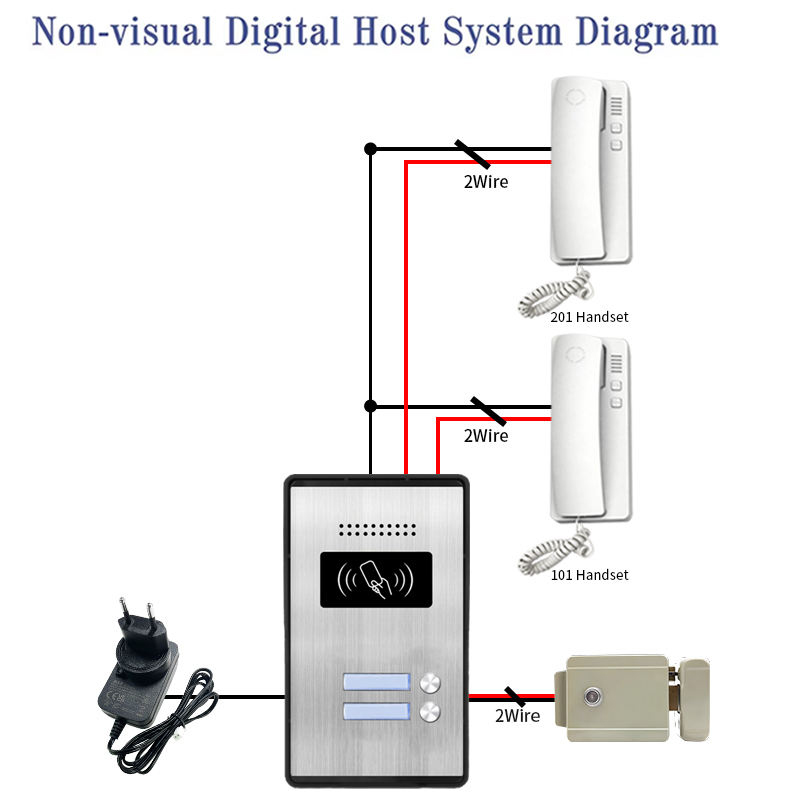
Preguntas frecuentes sobre sistemas de intercomunicadores inalámbricos
P1: ¿Pueden funcionar los sistemas de intercomunicadores inalámbricos sin internet?
Sí, muchos intercomunicadores inalámbricos utilizan RF, DECT o Bluetooth, que no requieren internet. Sin embargo, los sistemas que dependen de WiFi o aplicaciones móviles generalmente necesitan una conexión a internet para una funcionalidad completa, como desbloqueo remoto o transmisión de video.
P2: ¿Cuál es el rango típico de un intercomunicador inalámbrico?
Depende de la tecnología utilizada:
- Basados en WiFi: ~50 metros en interiores
- Basado en RF: Hasta varios kilómetros (ideal para uso industrial)
- Basados en DECT: ~50–100 metros
- Intercomunicadores 4G/5G: Prácticamente ilimitado con cobertura celular
P3: ¿Qué tan seguros son los intercomunicadores inalámbricos?
Los intercomunicadores inalámbricos modernos cuentan con:
- Comunicación encriptada
- Acceso protegido con contraseña
- Almacenamiento seguro en la nube
- Alertas de manipulación
Para uso empresarial, se recomienda elegir sistemas que soporten cifrado AES y autenticación de dos factores.
P4: ¿Puedo usar un sistema de intercomunicador inalámbrico en un edificio de múltiples unidades?
Por supuesto. Muchos sistemas admiten funciones multi-suscriptor, permitiendo que cada inquilino tenga su propia unidad interior conectada a una estación exterior compartida.
Para tales aplicaciones, fabricantes como FARHD ofrecen soluciones completas sistemas de intercomunicación de apartamentos múltiples que son escalables y personalizables.
🔗 Explora soluciones de intercomunicadores multiunidad de la serie de villas de 4 hilos de FARHD
Q5: ¿Cómo me convierto en distribuidor de sistemas de intercomunicación inalámbricos?
Para ser distribuidor:
- Identifica fabricantes OEM/ODM reputados como FARHD
- Solicita catálogos de productos y MOQ (Cantidad Mínima de Pedido)
- Discute requisitos de marca, empaque y certificación
- Realiza tu pedido inicial a granel
- Colabora con el fabricante para soporte postventa y garantía
📞 ¿Interesado en convertirte en socio? Contacto FARHD para precios B2B, opciones de etiqueta privada y consulta técnica.
Reflexiones finales y llamada a la acción
Los sistemas de intercomunicación inalámbricos están transformando la forma en que los hogares, empresas e instituciones gestionan el acceso, la comunicación y la seguridad. Ya seas un integrador de sistemas, mayorista o desarrollador inmobiliario, invertir en la tecnología adecuada y un socio de fabricación puede marcar toda la diferencia.
Asóciate con FARHD hoy
Con más de 20 años de experiencia en I+D y fabricación, FARHD ofrece soluciones líderes en la industria de intercomunicación inalámbrica con capacidades completas de OEM/ODM. Desde componentes principales hasta sistemas completos, FARHD apoya tu negocio en cada paso.
👉 Visita el Página "Acerca de nosotros" para descubrir por qué las principales marcas confían en FARHD por su calidad, innovación y escalabilidad.
¿Buscas iniciar tu negocio de intercomunicadores o expandir tu línea de productos?
📩 Póngase en contacto con FARHD para una consulta gratuita y presupuesto personalizado.
También le puede interesar
-

FARHD to Showcase All-Climate Technology at 2026 China Security Expo, Empowering Smart Communities in Northern China
From November 3 to 6, 2026, FARHD, a global leader in smart security and communication solutions, will unveil its full range of products deeply optimized for the harsh winter conditions of northern China at the 18th China International Social Public Security Products Expo (Security China). Under the theme “Digital Intelligence World, Total Security,” the expo…
-
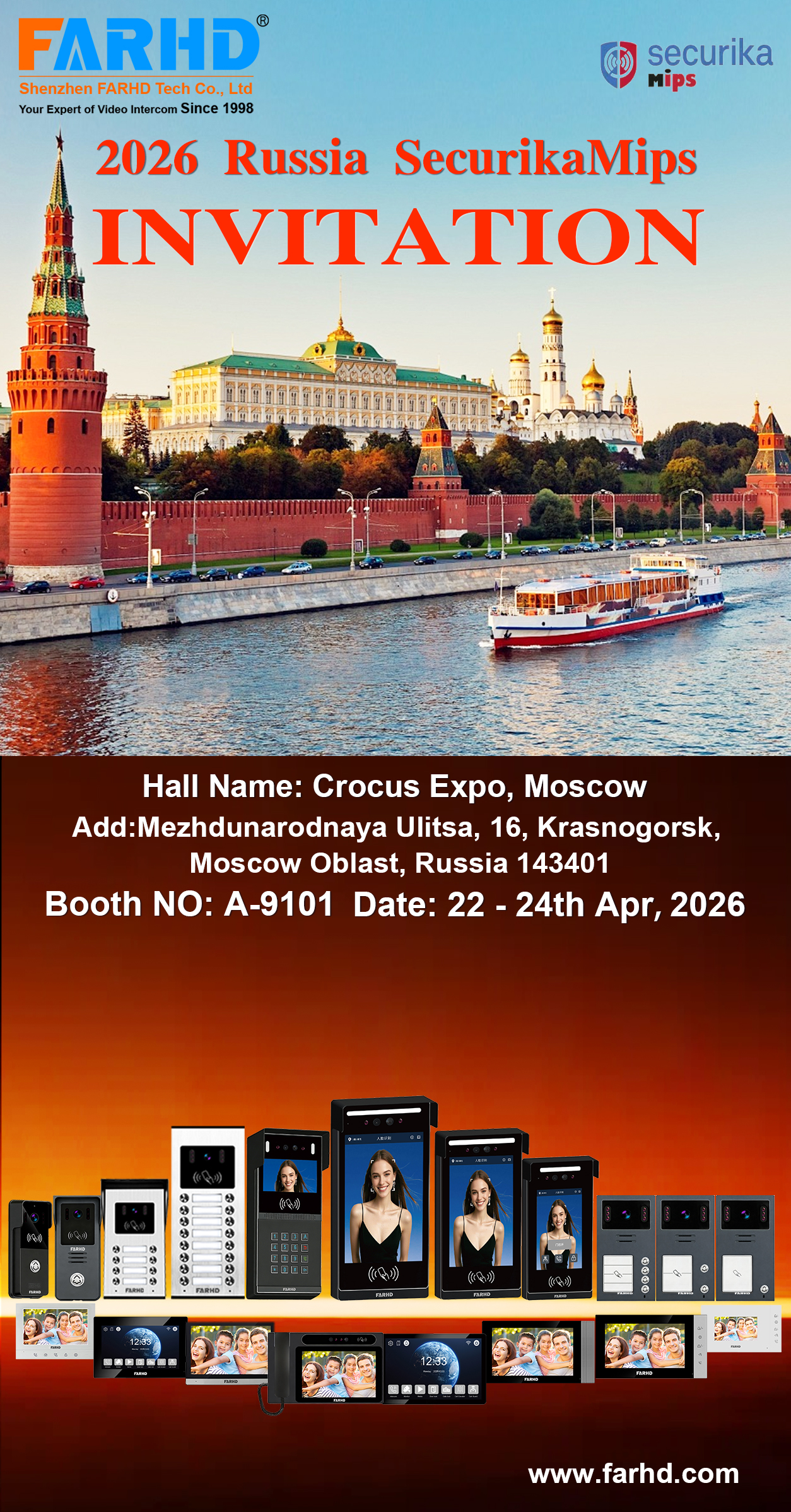
FARHD to Showcase All-Climate Hard-Tech Solutions at Securika Moscow 2026
From April 22 to 24, 2026, FARHD, a global leader in smart security and communication solutions, will unveil its full range of products engineered for extreme climates at Securika Moscow 2026, held at Crocus Expo in Moscow, Russia. At booth A-9101, FARHD will present its smart intercom, access control, and smart home solutions—all deeply optimized…
-
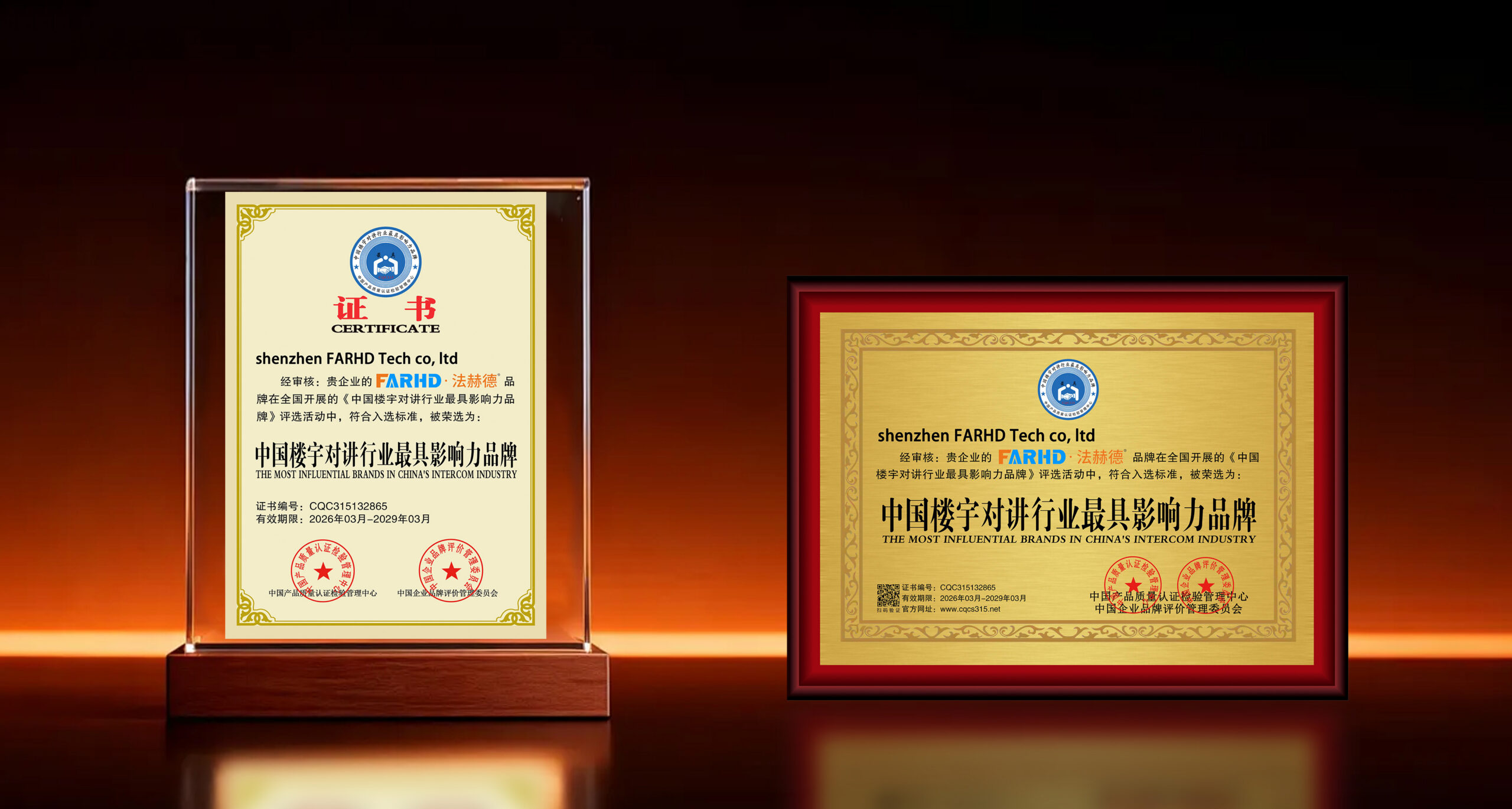
FARHD Honored with Multiple Prestigious Awards in China’s Building Intercom Industry, 28 Years of Deep Engagement in the Chinese Market Solidifying Its Position as a Leading Brand
Recently, in the annual selection event jointly organized by the China Security and Protection Industry Association and multiple authoritative media outlets, FARHD, by virtue of its profound industry experience, outstanding technological innovation capabilities, and extensive market recognition, was awarded the prestigious “Most Influential Brand in China’s Building Intercom Industry” . These accolades not only affirm FARHD’s 28…
-
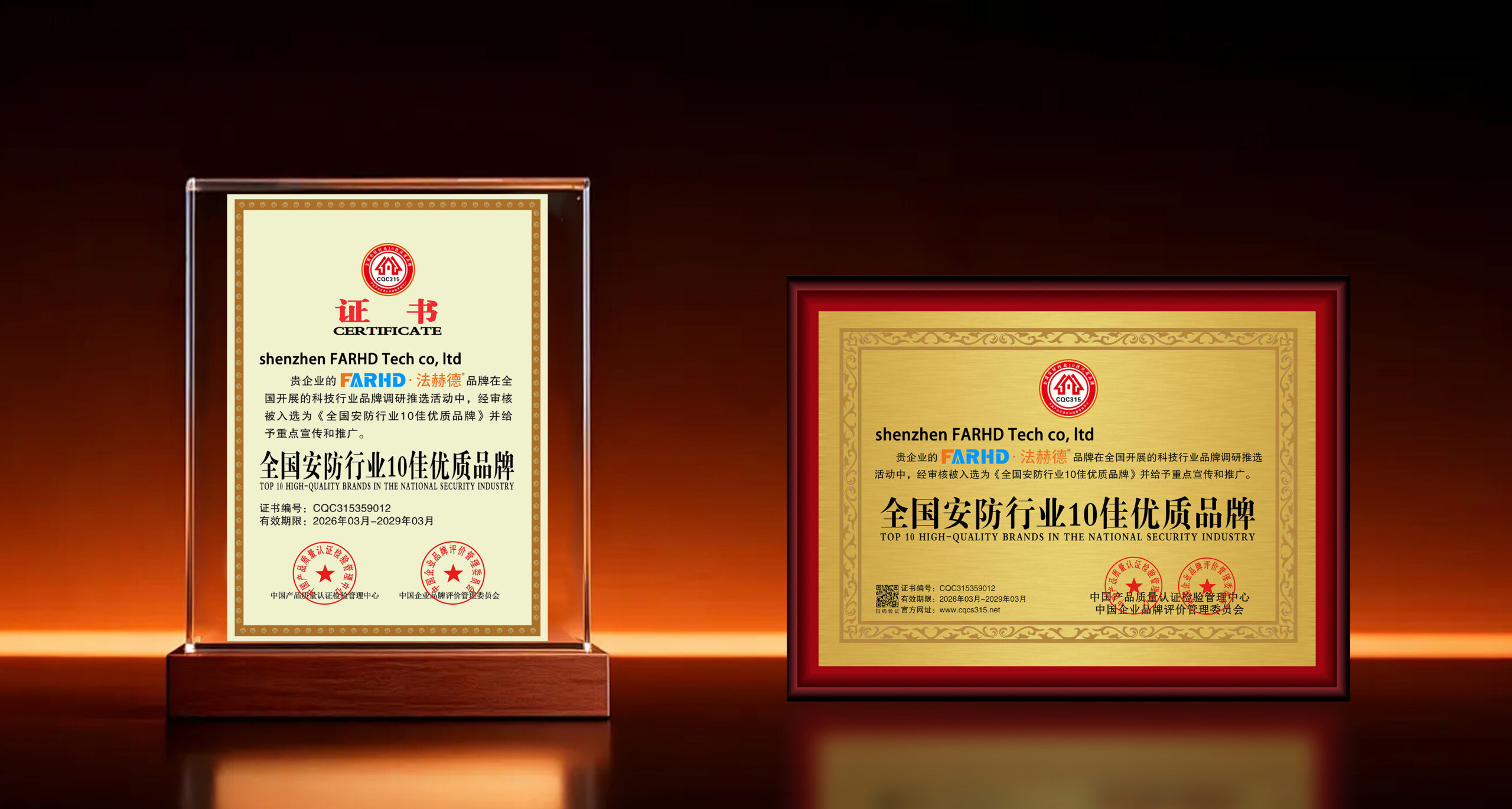
FARHD Honored with Multiple Prestigious Awards in China’s Building Intercom Industry, 28 Years of Deep Engagement in the Chinese Market Solidifying Its Position as a Leading Brand
Recently, in the annual selection event jointly organized by the China Security and Protection Industry Association and multiple authoritative media outlets, FARHD, by virtue of its profound industry experience, outstanding technological innovation capabilities, and extensive market recognition, was awarded the prestigious “National Top 10 Quality Brands in the Security Industry” . These accolades not only affirm FARHD’s…